Name: Early 1900s Composition Mama Doll
Made by and When: Horsman Dolls, early 1900s
Material: Restored composition head, arms, and legs; stuffed cloth body with “mama” crier, paint
Marks: (Head) A / HORSMAN
Height: 22 inches
Hair, Eyes, Mouth: Black painted hair with sculpted curls in the front and center of the head, brown tin sleep eyes with attached brown upper eyelashes, closed mouth with painted red lips
Clothes: Original off-white Dotted Swiss dress, matching bonnet, off-white cotton full slip, replaced beige pantalettes, one original rayon sock and a replaced rayon sock, one original tan oilcloth shoe and a replaced replica; yellow and orange floral appliqués were added to the dress and bonnet by the curator.
Provenance: In approximately 1913, Joseph William Emhuff (born in 1842), gave this composition Horsman Mama doll to his granddaughter, Mildred Helen Emhuff (born in 1909). The doll was not new when the child received it; however, it became Mildred’s favorite doll and was later passed down to her granddaughter, Pamela Kellogg, who donated it to this museum. Trudy Williams, Ms. Kellogg’s sister, orchestrated the donation. Mr. Emhuff’s great-grandchildren often wondered why their grandmother favored this doll over all others. Eventually, they concluded it was their great-grandfather’s work in the African American community in Detroit that influenced young Mildred’s love for the doll.
Joseph William Emhuff was a photographer whose shop was on Hastings Street in Detroit, Michigan, in 1887. Hastings Street, which ran through the Black Bottom neighborhood in Detroit, was a center of both European Jewish and African American settlement in the late 19th and early 20th centuries. Emhuff family members believe the area was once an Underground Railroad hub that aided enslaved people to escape to Canada. During his career, Mr. Emhuff photographed many African Americans (see the last gallery photograph). By the early 1900s, the Horsman doll in this installation was used as a prop in his studio before it was given to his granddaughter, Mildred.
Many were hidden in St Marys Church on that street. Some 5000 escaped, hidden on that street by neighbors. We found many of his photographs in Michigan University’s special collections and Wayne State University. He, a white man, photographed dozens of African Americans. We are so proud of that role he played. —Trudy Williams, great-granddaughter of Joseph William Emhuff
The Directory of Early Michigan Photographers indicates, “Joseph was born in Switzerland in February of 1841*, was brought to the United States in 1847, and became a naturalized citizen. Matilda was born in Michigan to Canadian parents in July of 1844, and she married Joseph about 1866. Their sons were born in Michigan: William in September of 1868, Leonard in 1874, and Arthur in July of 1878. William J. Emhuff worked as a photographer for Joseph in 1885, from 1887 through 1890 and in 1892; succeeded him in 1896 and in 1899; and was his partner in 1897. The address on Hastings was sometimes listed as 154-156. The building at 370 Buchanan was on the corner of 23rd Street. Joseph and Matilda were living in 1920 next door to the family of their son Leonard, who was a market gardener.” (Leonard was Mildred’s father.)
*The family indicates Joseph William Emhuff was born in 1842.
Gallery
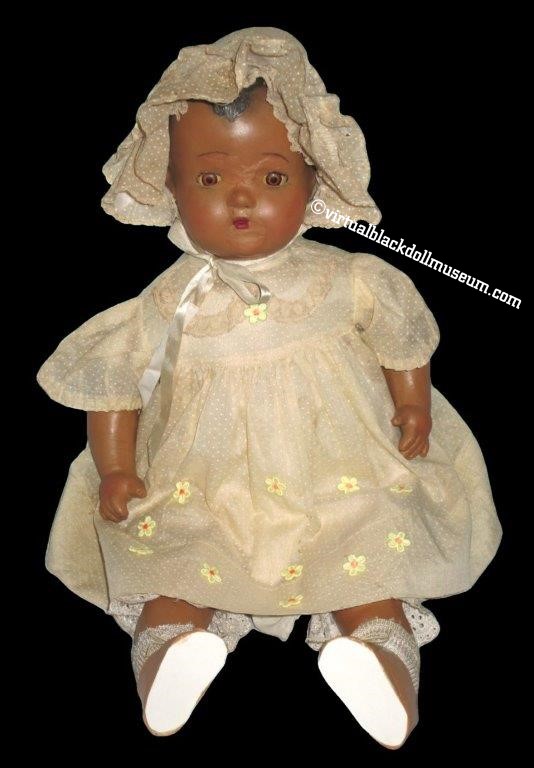
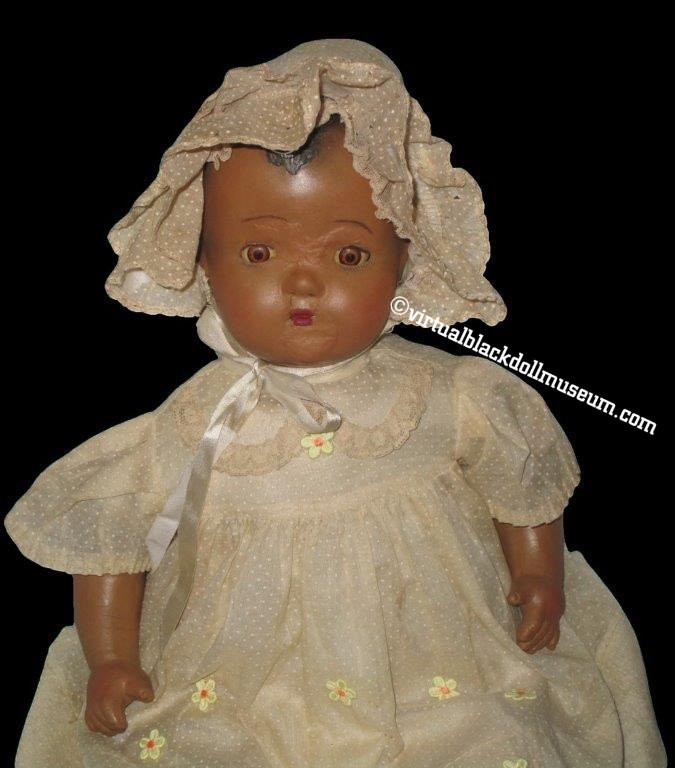
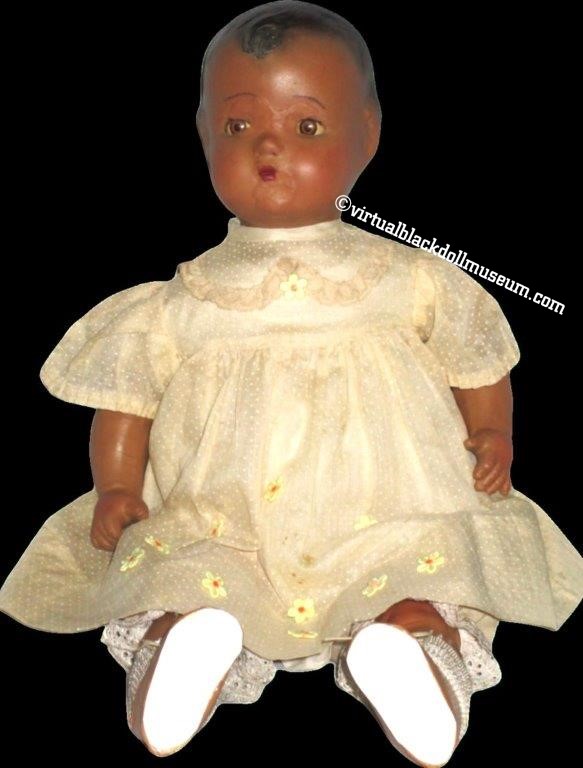
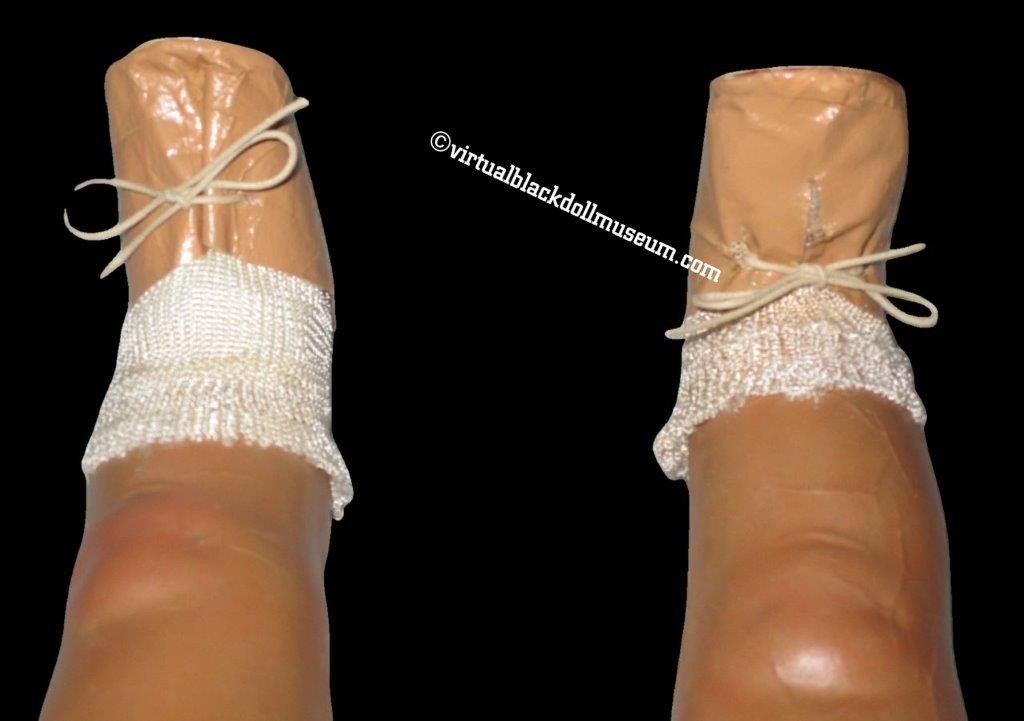
L-R: A replica of the original oilcloth shoe and a replaced sock are on the left. The doll’s original oilcloth shoe and original rayon sock are on the right.
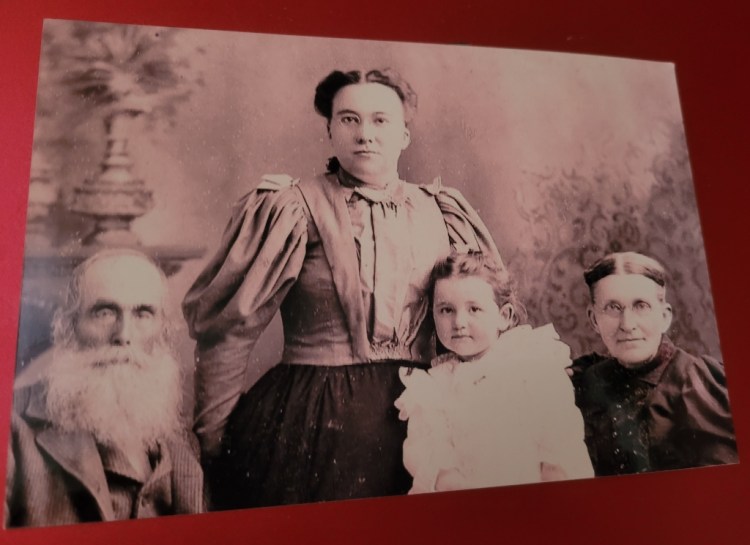
L-R: In a circa 1913 photograph are early Detroit pioneers Joseph William Emhuff, Martha Jach Emhuff (Mildred’s mother, standing), young Mildred Emhuff, and Joseph’s wife, Mathilda (Mildred’s grandmother). Young Mildred is a former owner of the composition Horsman Mama doll in this installation.
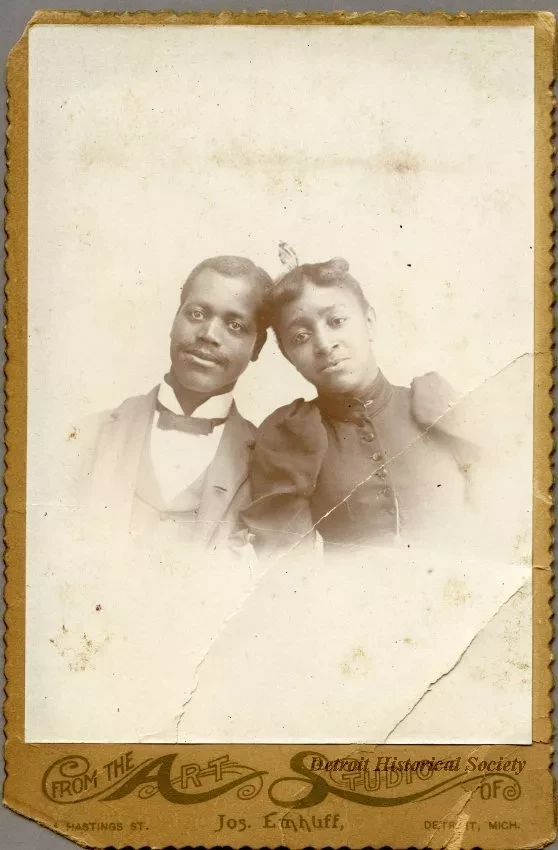
A sepia-toned cabinet card photograph of a young African American couple taken in the art studio of Joseph William Emhuff, ca. 1890
Reference
“Photograph, Cabinet.” Detroit Historical Society, 13 May 2025, http://www.detroithistorical.org/learn/online-research/collection/photo/photograph-cabinet-196#slide1.
_________
Your comments are valued. Donations support the initiative to preserve black-doll history.
If you subscribe to DeeBeeGee’s Virtual Black Doll Museum™ by email, click the post title of the email, which links to the website to view all text and associated media. Please “like” and share this installation with your social media contacts. If you’d like to subscribe, add your email address to the subscribe or sign-up field in the footer or right sidebar. Add your email address to the subscribe or sign-up field in the footer or right sidebar.


I don’t normally comment on your exhibits, it’s enough to keep up with your blog. lol But the story of this doll just won’t leave my heart. First of all, she’s an adorable doll. But how she ended up with her owner is a sweet tale. I really enjoyed the background story of Joseph and the tintype of the African American couple is too sweet. The soft smile on his face, you can tell her loves her. Even the fact that she retains so much of her original outfit, when she was a child’s beloved companion, is just amazing. I love all your entries, but this one was just special.
Michelle Bogart
LikeLike
I’m happy hear that you found this doll’s story touching, Michelle. It touched my heart too, which is when my determination to bring her back to life kicked in. I am debating if I should share the rejuvenation process in a picture and caption post or a video to publish on the Black Doll Collecting blog. I did take photos of the restoration process for my personal records.
LikeLike
Picture and caption work best for me. I have trouble with videos. But of course, it’s your choice!
Michelle Bogart
LikeLike