When Did You Fall in Love With Black Dolls? is a profile series that celebrates the artists, collectors, and visionaries whose passion has helped preserve and promote the beauty, history, and cultural significance of Black dolls. Alongside photographs of their work or collection, each profile shares the individual’s personal story and provides contact information, inviting readers to connect with and support their contributions to the Black-doll community.
Doll artist Alexzandria shared examples of her doll art and answered the following questions:
When did you fall in love with Black dolls and what inspired you to begin making them?
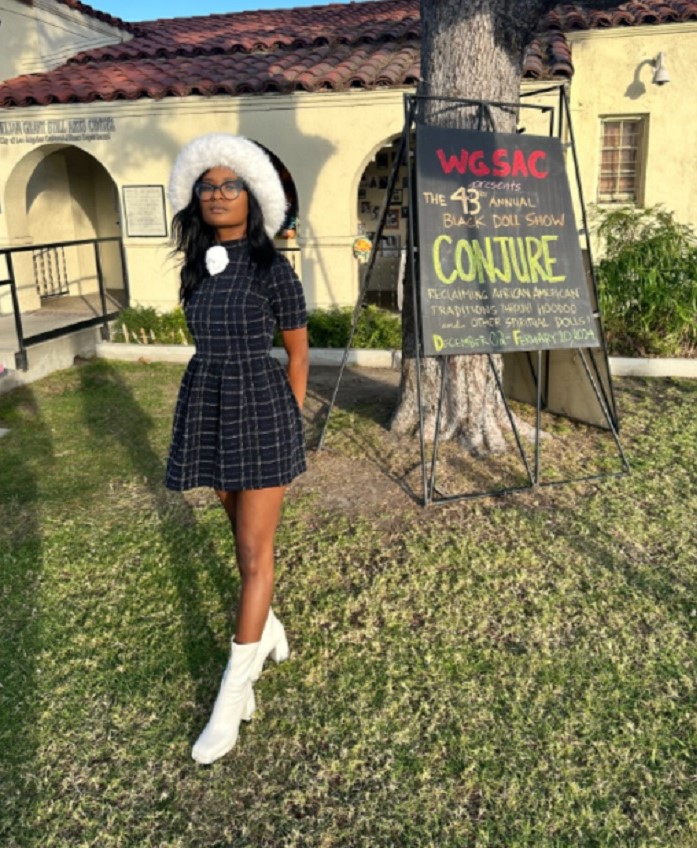
In 2021, the William Grant Still Art Center in Los Angeles announced their annual “Call for [Black] Dolls,” and I found myself reading the prospectus over and over, wishing I knew what it took to create a doll so I could participate. My interest in this niche subject led me to research makers and the story of the craft. I uncovered a rich, complex history of human rights, self-determination, and cultural development through these vessels we call dolls. Continually, I found myself in awe of how these miniature objects are reflections of material reality, our political circumstances, and our own self-worth.
How long have you been making Black dolls?
My journey in Black doll-making officially started in 2022.
What medium(s) do you use in doll making and why?
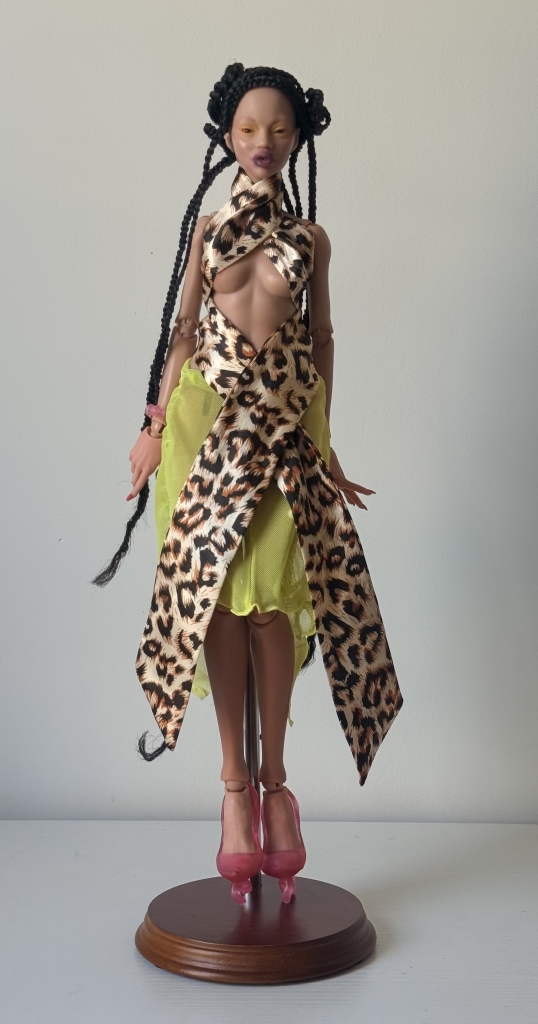
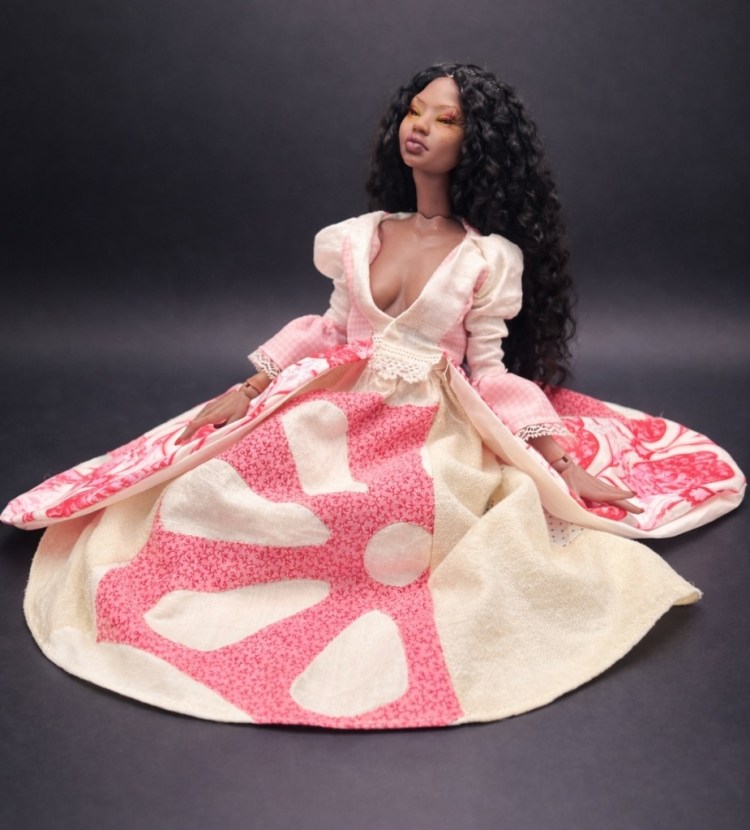
The bodies of my dolls are composed of resin, which is sometimes referred to as “imitation porcelain,” in order to mimic the look and feel of human skin. Using resin also allows me to take advantage of skin tone customization, 3D printing to produce new parts, and eventually mold making.
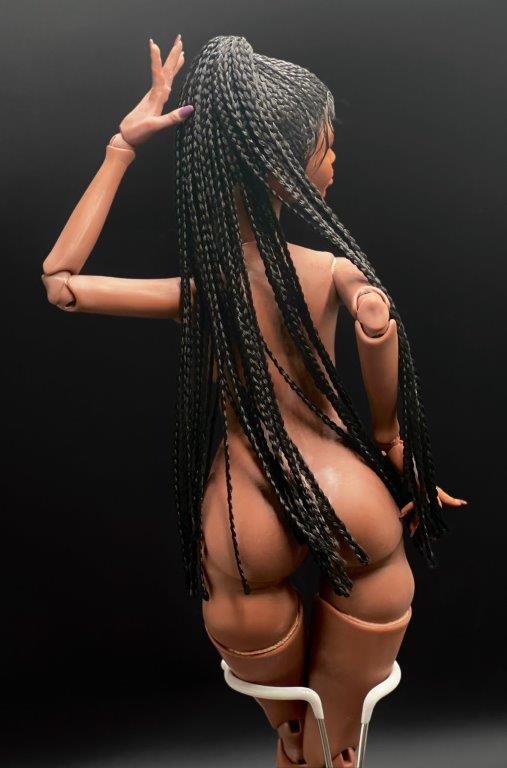
My doll wigs could be made from alpaca hair, human hair, synthetic fiber, or some other miscellaneous material. It all depends on the intended texture and style of the desired look. For clothing, I shop for new textiles, thrift items, or repurpose things from my closet.
Do you sculpt and/or create molds for your dolls?
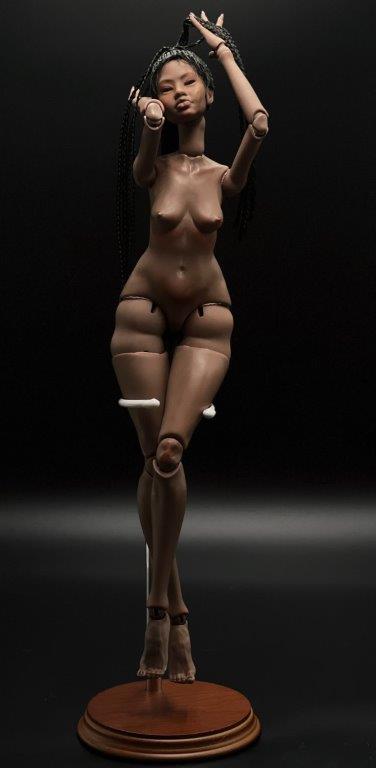
I sculpt my dolls digitally using a program called Blender 3D. I love this process because I can infinitely tweak my projects, share the files with other digital artists, and finally see my projects come to life in the real world when I 3D print them.
What is your favorite type of doll to make?
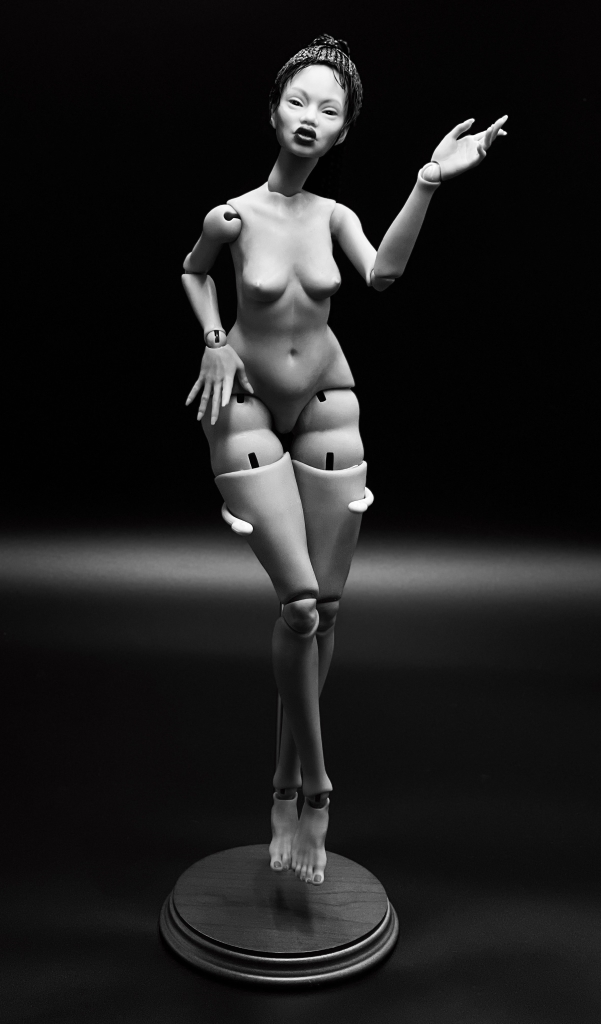
The ball-jointed doll is my absolute favorite because of its potential for complex articulation and realism. Also, I love being able to engage with many different materials, as the body, hair, and clothing add so much texture and layers of storytelling.
Do you name your dolls?
Each of my dolls goes by the name of their face sculpt.
How tall are your dolls—size range, or average height?
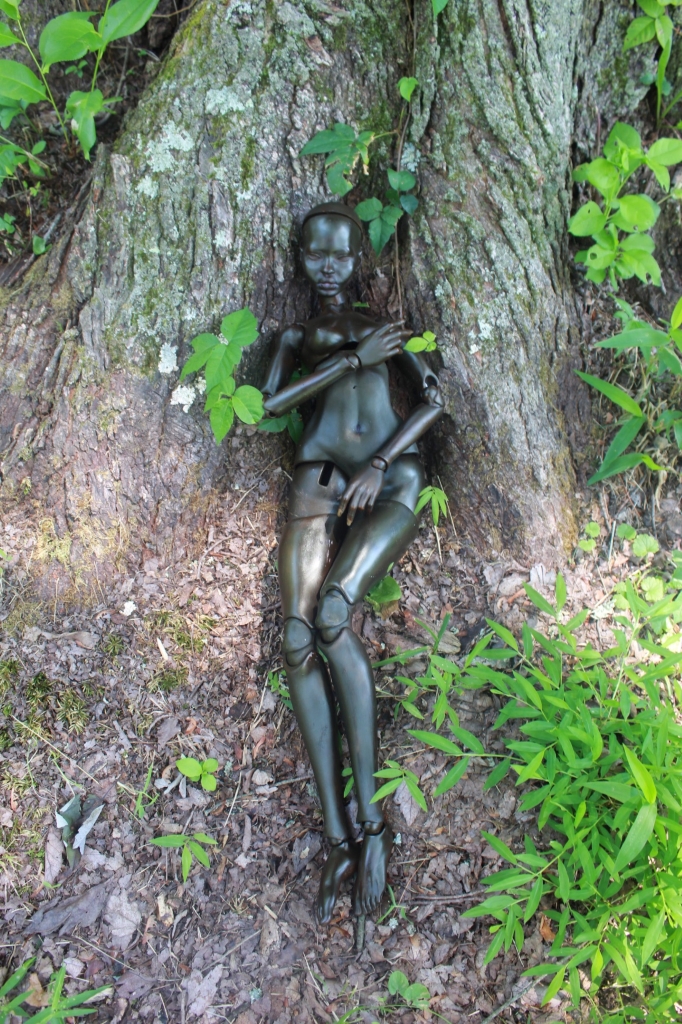
My dolls are made in 1/4 scale and stand at 16 inches. I typically list them as 16″x3″x3″. The largest doll I ever made was 24 inches as an experiment, but I only create dolls in the standard 1/4 scale now.
Are you still making dolls?
Absolutely!
Do you teach doll making?
This is an opportunity I’ve had yet to discover, and I am definitely open to it.
What tips would you offer novice doll makers?
Allow yourself to be obsessed with this craft, its history, and what it can do for a contemporary audience. Even as a novice, I think it is important to focus on being excellent. To me, excellence is manifest as a sense of pride, obvious dedication, and maintaining standards in what you create and how you present it. These qualities will translate into experiences that are meaningful to you as an artist and to the people fortunate enough to engage with your art.
Please share what you’re working on currently.
A million things. My greatest aspiration is to carry the significance of this art form into fine art exhibitions through collections and installations. I spent the first few years of my practice with my head down, learning the craft, but now it’s time to push myself further. I still have much to learn, but now I am balancing creating, documenting my work, presenting it, and speaking on its broad cultural value.
Have your dolls been featured in publications, museums, exhibits, etc.?
I have been fortunate to routinely exhibit my work and garner press coverage around the US. One exhibition I am particularly proud of is Soft Landings, where a doll of mine was showcased with Gee’s Bend craftwork at Yale’s Audubon 63 gallery.
Do you sell your dolls, and if so, please share where they are sold and the average price range?
Yes, they are typically sold by email. A minimal doll averages around $800, with fully customized pieces averaging $1300.
What is the most fulfilling aspect of doll making for you?
Exhibiting my dolls and having conversations with people who appreciate my art is so fulfilling. Seeing my ideas finally become a preserved work of art I can share with other people is what I live for. When I engage with a receptive community, I feel sustained in all the hard work I do to make my dolls a reality.
Where do you see yourself as a doll maker in the future?
I see myself exploring dolls as contemporary sculpture, with my work leading me to many more exhibitions, near and far. I envision my work in the esteemed collections of art enthusiasts and saved in mood boards as inspiration for everyday people. I want my art to be in conversation with artists I study and admire, such as Wangechi Mutu and Woodrow Nash. Ultimately, I see my practice as an excuse to connect with intelligent, passionate, creative people of all walks of life.
Alexzandria’s Bio:
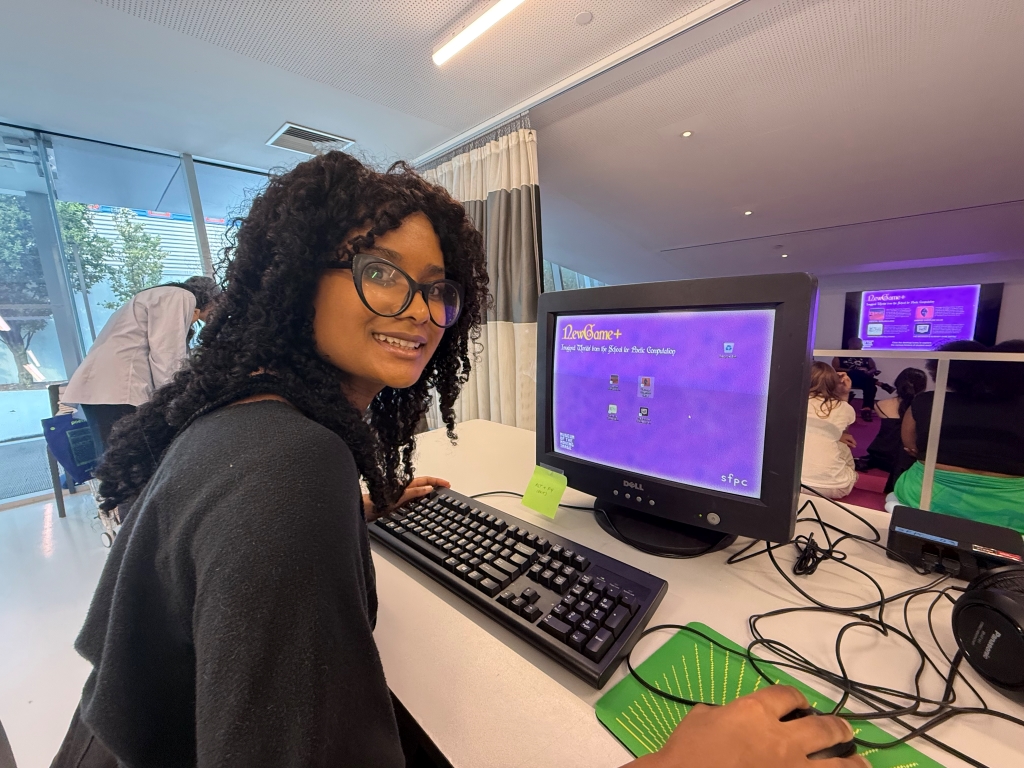
Alexzandria is a Los Angeles-based sculptor whose practice reimagines the doll as an object of history and possibility. Working primarily in ball-jointed sculpture and textile, she creates figures that explore the intersections of Black identity, beauty, craft, and speculative futures. Her work is informed by archival research and the legacy of Black doll-making, using the doll to explore themes of self-determination. Recent exhibitions include NewGame+ at the Museum of the Moving Image, NOMAD at Torrance Art Museum, the 44th Annual Black Doll Show at William Grant Still Art Center, and exhibitions at Ely Center of Contemporary Art. Her work has been featured in New Haven Independent, Midbrow, and other publications.
Ways to Connect with Alexzandria:
Website (coming soon): alexzandriathegood.com
Instagram: @alexzandriathegood
Email: allylubon@gmail.com
__________
Thank you, Alexzandria, for sharing your compelling profile with DeeBeeGee’s Virtual Black Doll Museum as the first profiled doll artist in the When Did You Fall in Love With Black Dolls? series. Please reconnect with us after your website is published and share future updates on your BJD art accomplishments.
__________
Call for Submissions: If you are a doll collector or doll artist who chiefly collects or makes Black dolls and would like your profile included in this monthly series, please contact the curator, Debbie Behan Garrett, at virtualblackdollmuseum@gmail.com for submission details.


Her dolls are absolutely spellbinding. Following right away on Instagram and I look forward to her website launch.
LikeLiked by 1 person
Yes! Spellbinding is a perfect description of Alexzandria’s dolls! Thank your comment.
LikeLike