
When Did You Fall in Love With Black Dolls? is a profile series that celebrates the artists, collectors, and visionaries whose passion has helped preserve and promote the beauty, history, and cultural significance of Black dolls. Alongside photographs of their work or collection, each profile shares the individual’s personal story and provides contact information, inviting readers to connect with and support their contributions to the Black-doll community. Our first profiled collector is Telisa Hodge Spain-Watson, who answered a series of questions about her love of Black dolls.
When Did You Fall in Love With Black Dolls?
I have always been in love with dolls, but I can specifically remember falling in love with Black dolls the first time I saw what I thought was a “pretty” Black doll, when I was around 6 or 7, and old enough to understand race. My step-grandmother had a large Black doll in a box in the spare bedroom, and when I visited, I would always admire the doll. Prior to seeing her doll, I had only seen either stereotyped Black dolls, or bald Black baby dolls, that I found unattractive. I also remember seeing the movie, Imitation of Life, and I thought the Black doll was pretty in the movie and could not understand why the Black girl did not want it. After seeing my step-grandmother’s Black doll, and the doll in the movie, I vowed to have a pretty Black doll for myself one day. The first Black doll that I owned was a Black Christie doll when I was around 8 or 9 years old, and although I liked the fact that it was Black, I was disappointed that it had short hair, so I couldn’t really style the hair. I also used to play with my cousin’s Julia doll when she brought it over during her visits, and although both Julia and Christie used the same face mold, Julia was prettier, and I couldn’t wait to get a Julia doll. I still love Julia dolls, and today I have around 15 of them. I view the Black Chatty Cathy doll as the doll I should have and would have had if the doll had been available. My mom purchased me a White Chatty Cathy doll when I was around four years old. She wanted the Black Chatty Cathy doll but was unable to find it. In the 1980s, she was able to find a Black Chatty Cathy doll, and she gave it to me.

Are you still collecting dolls?
I am definitely still collecting dolls. As a matter of fact, there has not been a single year from 1975 to the present that I have not purchased or acquired a doll. I do not see this changing even though I am now a senior citizen, unless I am physically or mentally incapacitated.
Please share the dolls you’re collecting right now?
Since I have retired, one of my goals is to share my doll collection/collecting experience with others in the hope that it may inspire others to also collect. I was fortunate to have the opportunity to display some of my dolls temporarily in the Spellman Museum of Forney History in Forney, Texas. This is a bi-annual experience that the museum allows me to do. My doll exhibit has White, Black, Hispanic, and some Asian dolls, to show the history, evolution, inclusiveness, and representation of dolls. I have Black dolls in the exhibit from every decade starting from the early 1900s to the present.
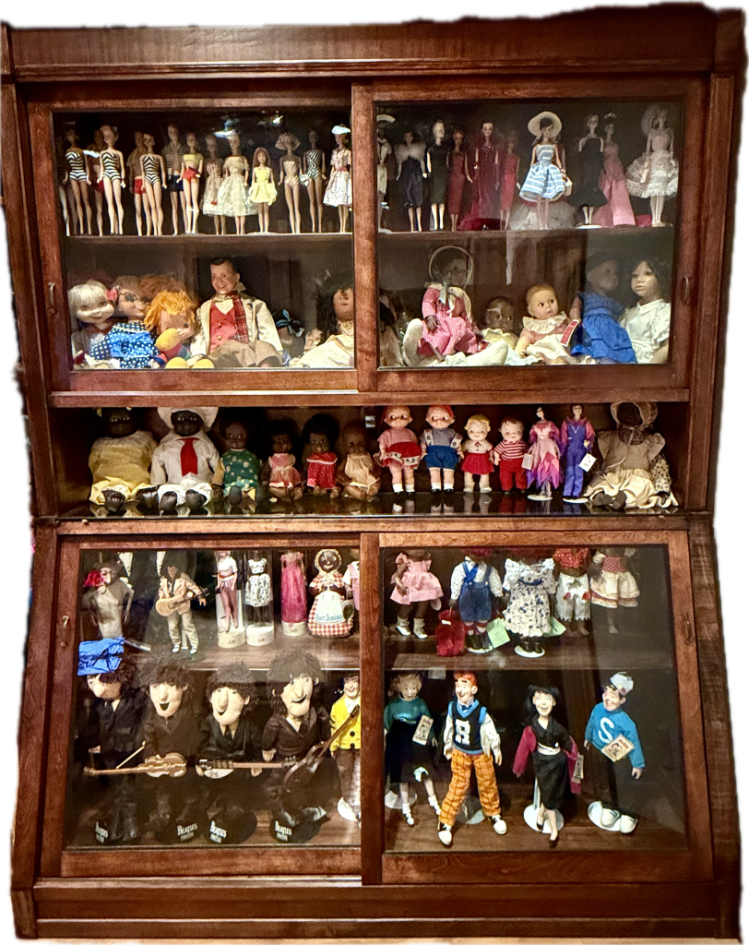
I am always performing some type of maintenance on my dolls, rearranging my dolls, looking for dolls, buying dolls, posting pictures of dolls, and/or reading and researching about dolls. I never suffer from doll burnout because I periodically change my doll focus. I may focus on one type of doll, and then I will move on to another type of doll. I have different types of doll goals; some are short-term, and some are long-term. For example, I purchased the first Byron Lars Barbie when it came out in 1997, and one of my goals was to acquire all the Byron Lars dolls. Lars put out a doll every year from 1997 until 2011. I didn’t purchase the final doll until 2021.
What is your favorite doll to collect?
My favorite doll to collect is Barbie, because she was the main doll I played with as a child. I was too young to remember when I got my Chatty Cathy doll, but I do remember when I received my first Barbie doll. It was a Skipper doll that I received from my next-door neighbor, Ms. Pat, for my kindergarten graduation in 1966. I still have that doll, and ironically, I just made a Black version of that doll a couple of weeks ago.
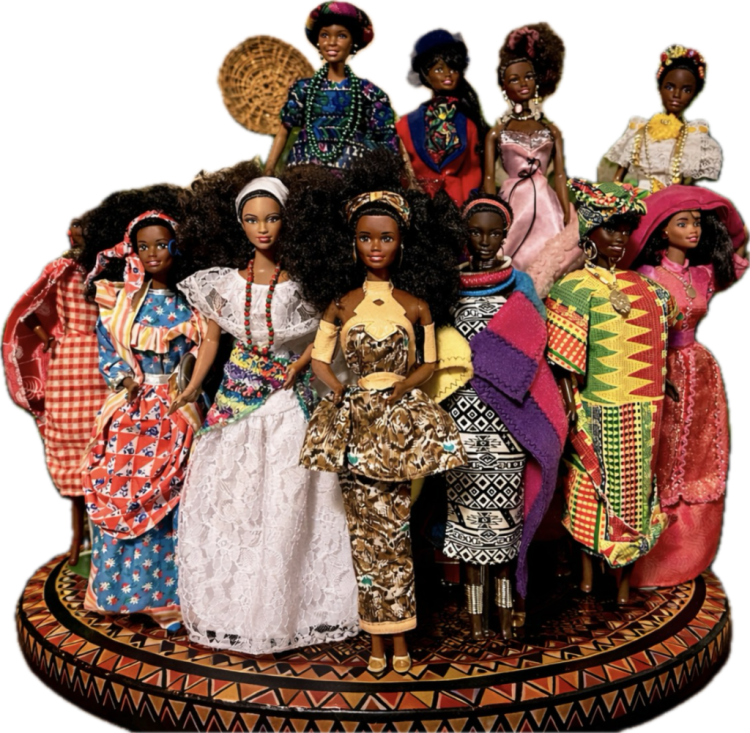
Although I am often critical of the quality of many current Barbie dolls, I still purchase more Barbies than I do any other type of doll. I love how today Mattel makes many different Black face molds, and I adjust the quality of the dolls with bodies I do not like by rebodying them with better quality Barbie body types that I prefer. I believe this “increases” rather than “decreases” the value of the doll. I also like making my version of Black Barbies that only came out in a White version. This adds another dimension to my doll collecting and provides me an opportunity to have a one-of-a-kind (OOAK) doll. After Barbie and fashion dolls, I like collecting Black dolls that I believe are historically important to Black-doll collecting and show the evolution and continuity of Black dolls, and I illustrate this by filling in the gaps in my collection.

Where do you see yourself as a Black-doll collector in the near future?
In the future, I see myself continuing to collect Black dolls, educating myself on both old and new Black dolls, fellowshipping with other Black-doll collectors, donating dolls, and being helpful and useful to current collectors and people who want to collect and have questions about doll collecting. I also want to continue to have periodic exhibits in museums and allow visitors to my home to see my collection. I would also like to continue to be a supportive and contributing member of the doll groups that I am a member of, especially WLBDA. One of the best things about Black-doll collecting is fellowshipping and learning from other Black-doll collectors.
What general changes would you like to see made in the world of doll collecting?
I would like people to collect what they like and for pleasure, rather than for profit. I would like people not to support doll scalpers, price gougers, and people who sell White dolls that were painted Black, without telling the buyer before the purchase. I would like people to realize that doll collecting is not about having many dolls in one’s collection because one can have a doll collection consisting of 10 dolls or 10,000 dolls. The number is unimportant; it’s the work, the enjoyment, and the consistency that are important. Doll collectors should not compare their collections to anyone else and should realize that every collection is unique and has something to add to the doll-collecting community.

What advice would you give to new Black-doll collectors?
I would tell new collectors to realize that doll collecting should be fun and rewarding, so do not just buy dolls, but enjoy the dolls that you buy. I would tell them to pace themselves, budget for dolls, and read doll books. Also, go to websites, watch videos about dolls and dolls collecting, and join a doll group. I would also advise new collectors to figure out what type of dolls they like and what types of dolls they want to collect. The popular doll to collect may not be the doll that they enjoy. In doll collecting, there is no “one size fits all,” and no two people have identical collections. Finally, collect what you like and research how much you should pay for a doll, because many dolls on the secondhand market are overpriced, and yet there are some that are bargains. In the end, the value of a doll is what “you” are willing to pay for it.

About Me
I am from Dallas, Texas, and have retired after over 43 years of federal service. I have been a doll collector for over 40 years. I love and collect many different types of Black dolls, and consider myself an eclectic collector, but I have a special love for Barbies. I believe there is always something new to learn, share, and enjoy about doll collecting. I love fellowshipping and meeting other doll collectors. I can be contacted at my email: Telisa60@gmail.com, or on Facebook.
In conclusion, I want to thank Debbie so much for this interview opportunity. She is the most knowledgeable person I know about Black-doll collecting and just doll knowledge period. She is such an asset to the Black-doll community, and I have learned so much from her and feel blessed to call her my friend.
__________
DeeBeeGee’s Virtual Black Doll Museum extends its heartfelt thanks to Telisa Hodge Spain‑Watson for promptly agreeing to be the first interviewee in the When Did You Fall in Love With Black Dolls? series. We also appreciate her installation contributions and her kind words about the curator. The museum thoroughly enjoyed learning about Telisa’s passion for Black dolls and is confident subscribers will enjoy reading her story as much as we did. Follow the link to the Spellman Museum of Forney History to view some of Telisa’s eclectic collection in the “More Than Toys” exhibit, which runs through October 2026.
More Than Toys: Discovering History Through Dolls
Telisa Hodge Spain-Watson’s VBDM Installation Contributions
__________
Call for Submissions: If you are a collector or artist of Black dolls and would like your profile included in this series, please contact the curator, Debbie Behan Garrett, at virtualblackdollmuseum@gmail.com for submission details.
Happy dolling!


One thought on “A Collector’s Profile: Telisa Hodge Spain-Watson”