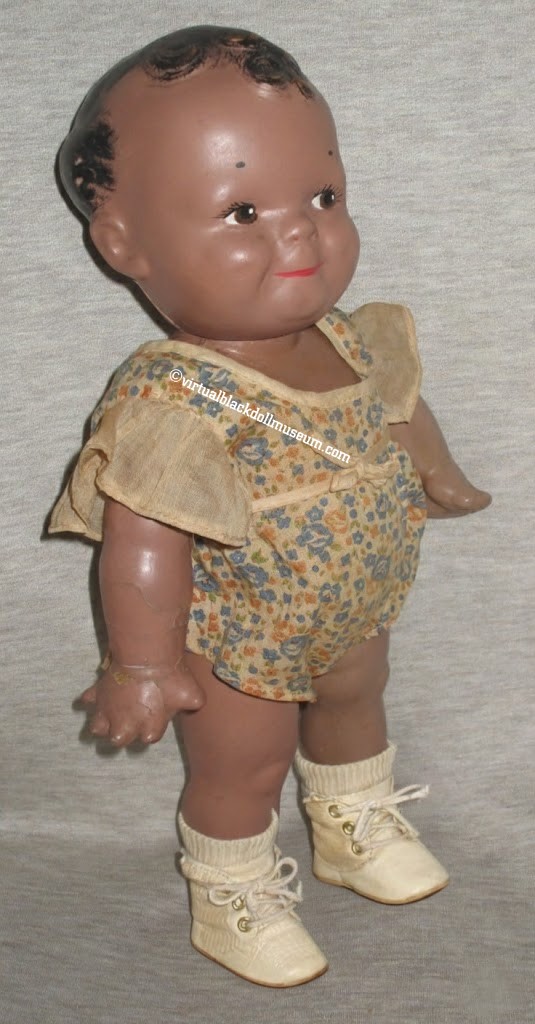
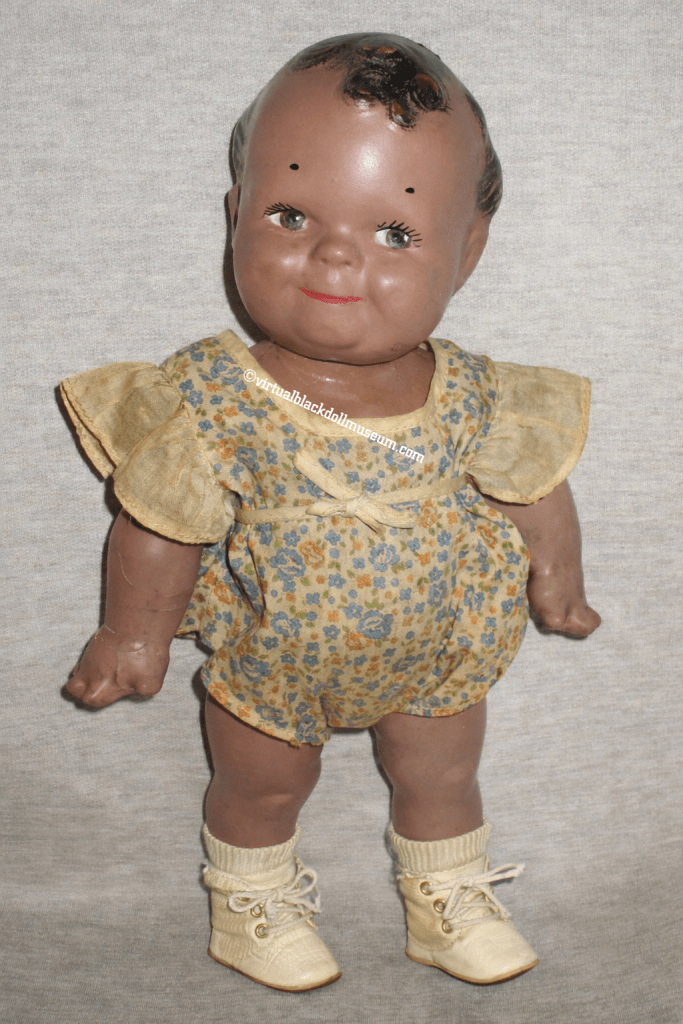
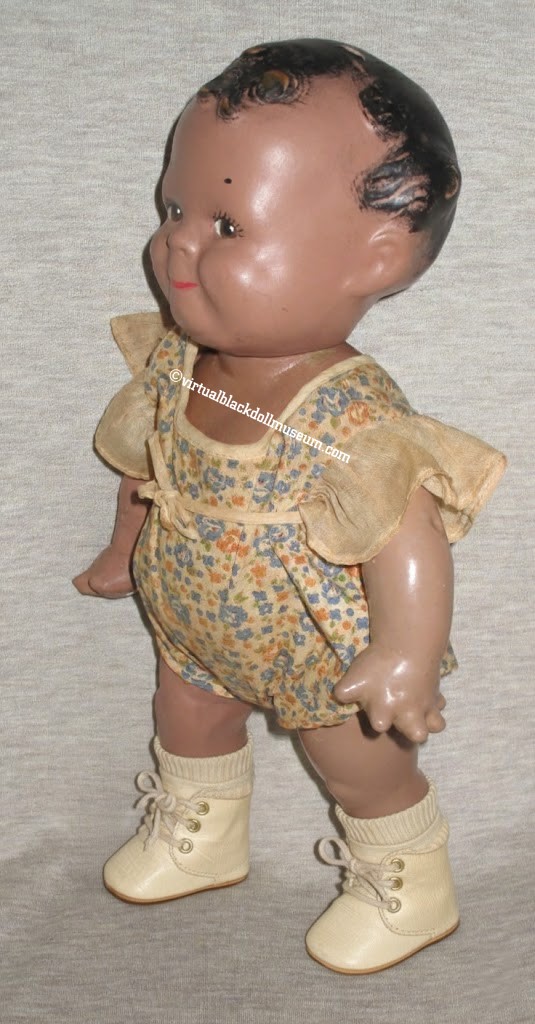
Name: Scootles
Made by and When: Rose O’Neill (artist designer), manufactured by Cameo Doll Company, 1925-1930
Material: Composition swivel head on a five-piece composition body, paint
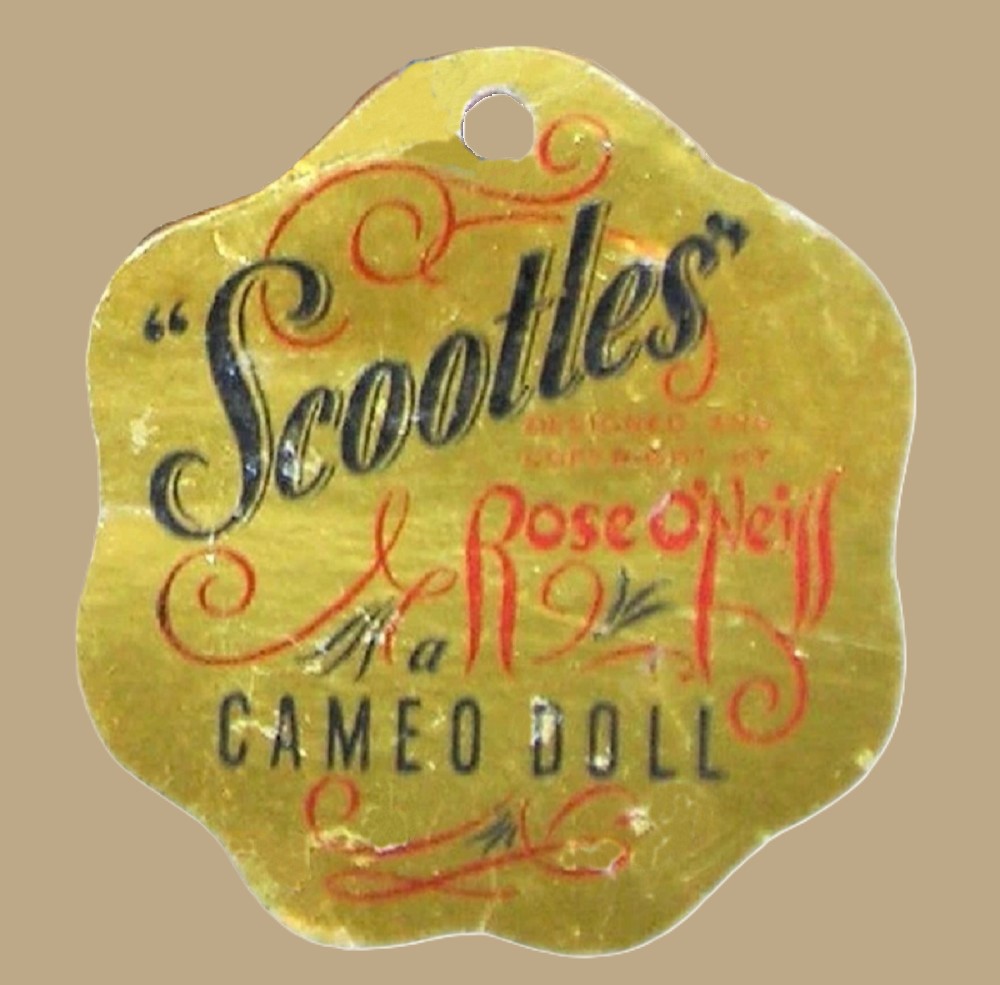
Marks: According to Theriault’s, Cameo composition Scootles dolls, designed by Rose O’Neill are often marked, typically featuring a “Scootles” signature and “Designed and Copyright by Rose O’Neill” on the head or body. Some, however, may have no, or only, faint markings, relying instead on a wrist tag or clothing label for identification. An example of an original Scootles wrist tag is included in the gallery images.
Height: 12 inches
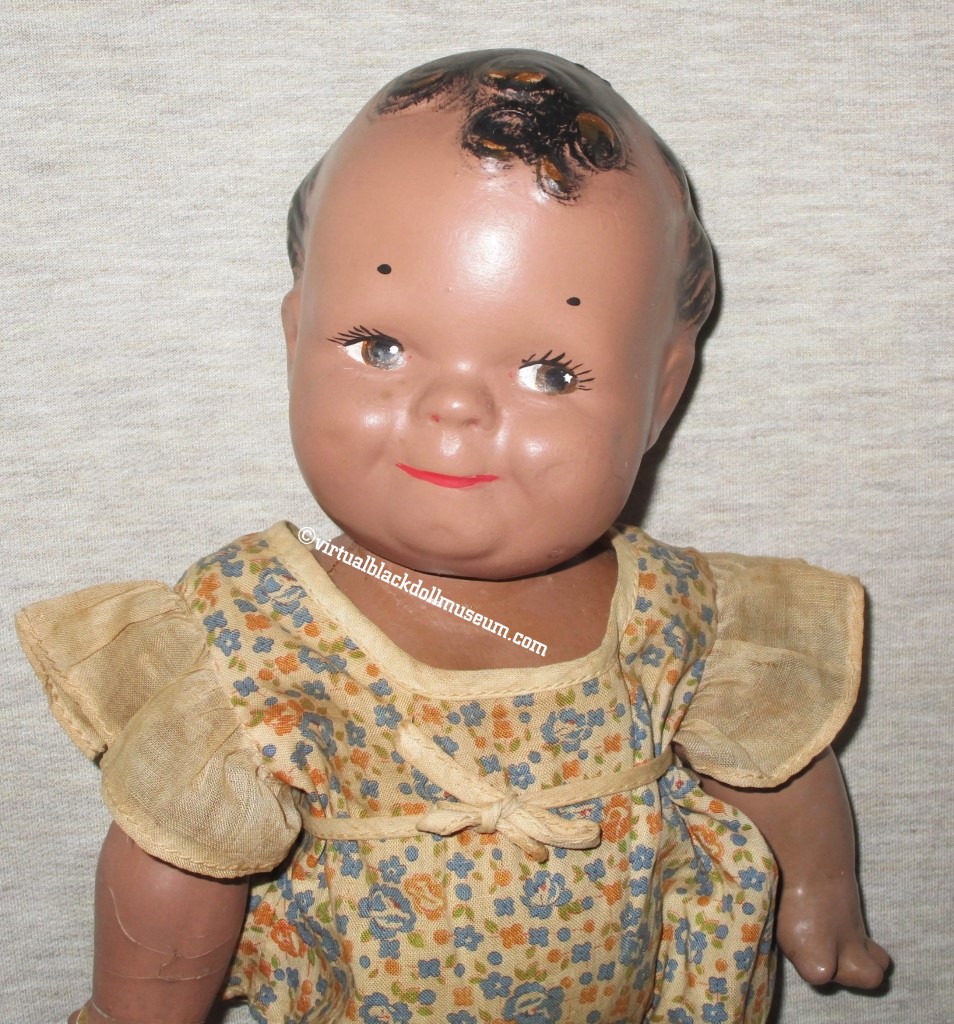
Hair, Eyes, Mouth: Sculpted black curls, painted brown side-glancing eyes with painted upper eyelashes, a smiling closed mouth with bright red lip color
Facial Characteristics: Chubby cheeks with dimples, a dimpled double chin, and two small black lines serve as eyebrows.
Clothes: Wears a beige romper with blue-floral-print and replaced vintage socks and shoes
Other: Known for its chubby, toddler-like features and side-glancing eyes, composition Scootles dolls, designed by Rose O’Neill and produced by the Cameo Doll Company, were first manufactured around 1925. While original White composition Scootles were popular in the 1920s and 1930s, rare, Black versions were produced during this early, vintage period. Scootles dolls were produced in various sizes, ranging from 7 1/2 inches to 20 inches, with some early Black versions appearing as 9-, 10-, 11-, and 12-inch models.
Vintage Scootles dolls, designed by Rose O’Neill, were produced later in Canada during the 1940s through a partnership between Cameo and NOMA Toys Limited in Owen Sound, Ontario. Sold in Niagara Falls, Ontario, Canada, the Scootles in this installation immigrated to the United States in 2026.
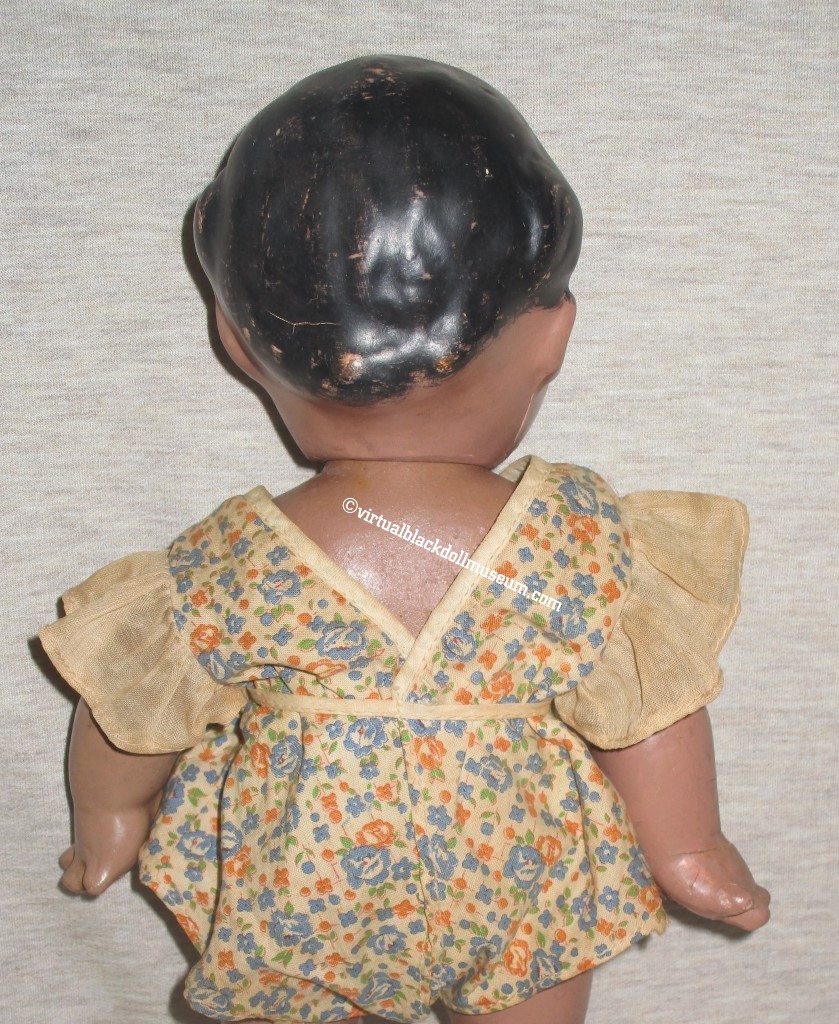
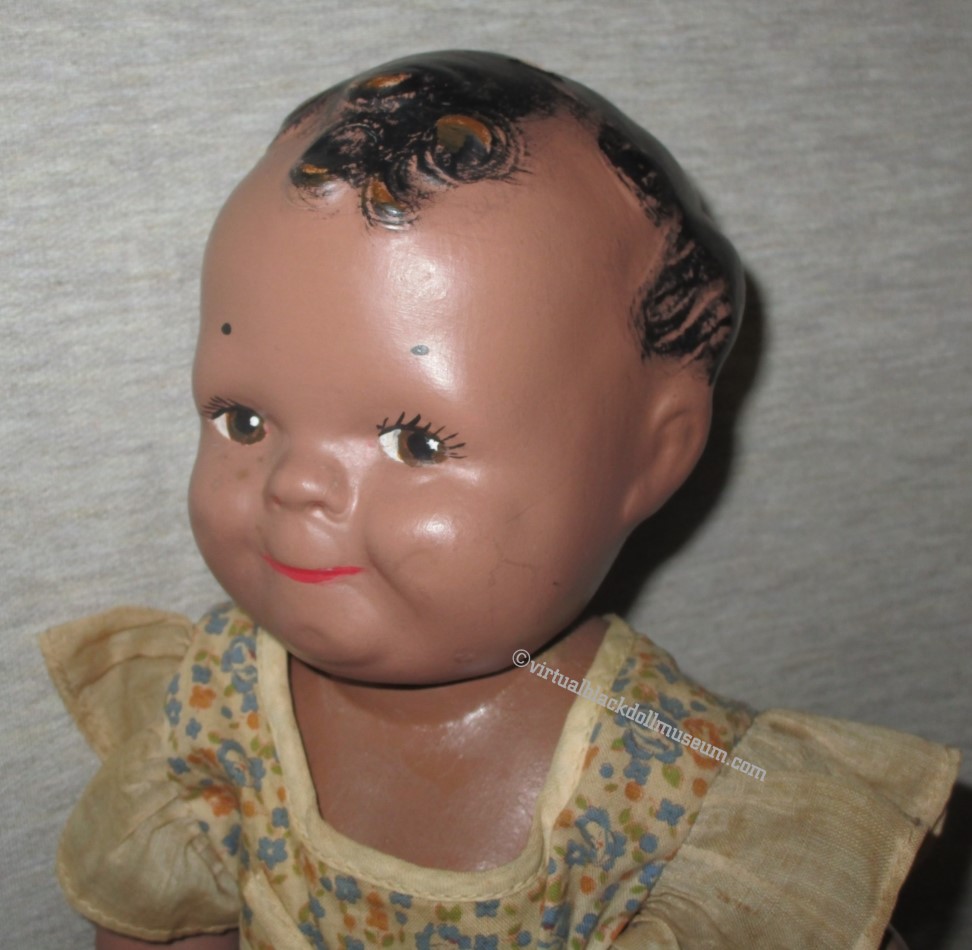
The National Museum of African American History and Culture owns a similar Scootles, as illustrated and described here.
See a 1991 reproduction porcelain Scootles here.
_________
Your comments are valued. Donations support the initiative to preserve Black-doll history.
If you subscribe to DeeBeeGee’s Virtual Black Doll Museum™ by email, click the post title of the email, which links to the website to view all text and associated media. Please “like” and share this installation with your social media contacts. If you’d like to subscribe, add your email address to the subscribe or sign-up field in the footer or right sidebar. Add your email address to the subscribe or sign-up field in the footer or right sidebar.
 DeeBeeGee's Virtual Black Doll Museum™