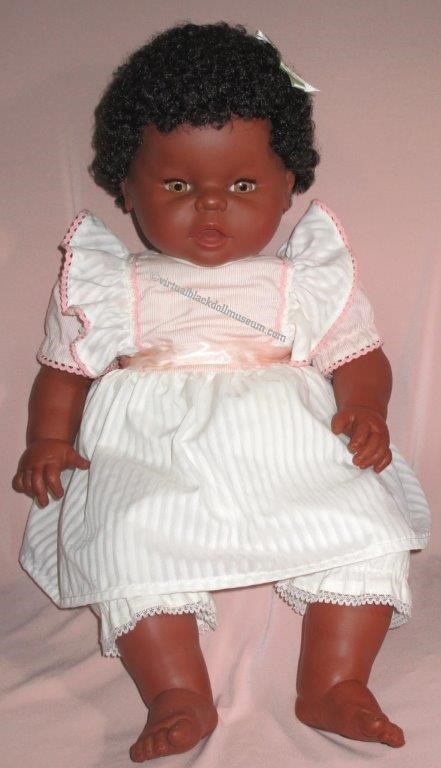
Name: An Uncle Barry’s Vicma Baby Doll
Made by and When: Vicma, Inc.; part of the company’s Ellita doll line; 1980s
Material: Vinyl, stuffed cloth, acrylic eyes, synthetic hair fibers, paint
Marks: None visible, smaller versions are marked VICMA on the neck
Box: The original packaging was typically a windowed cardboard box with “Ellita” printed in a stylized, bubbly script.
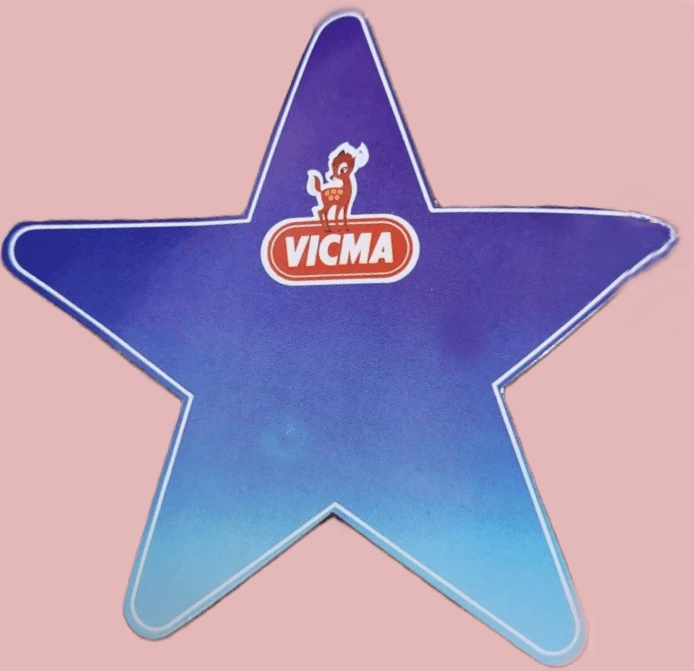
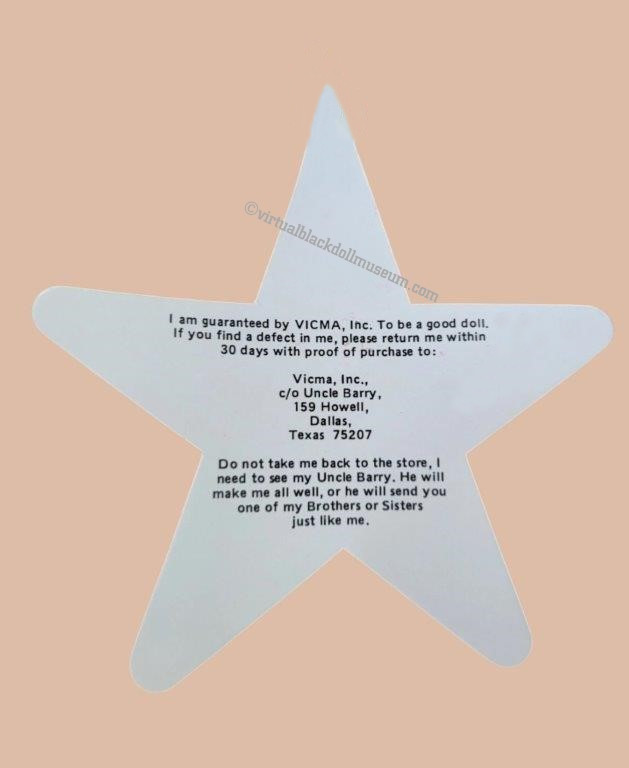
Hang tag: A star-shaped hang tag verifies this Vicma doll as a “good doll,” includes a 30-day guarantee, and a note from Uncle Barry. (See the gallery photo.)
Height: 24 inches
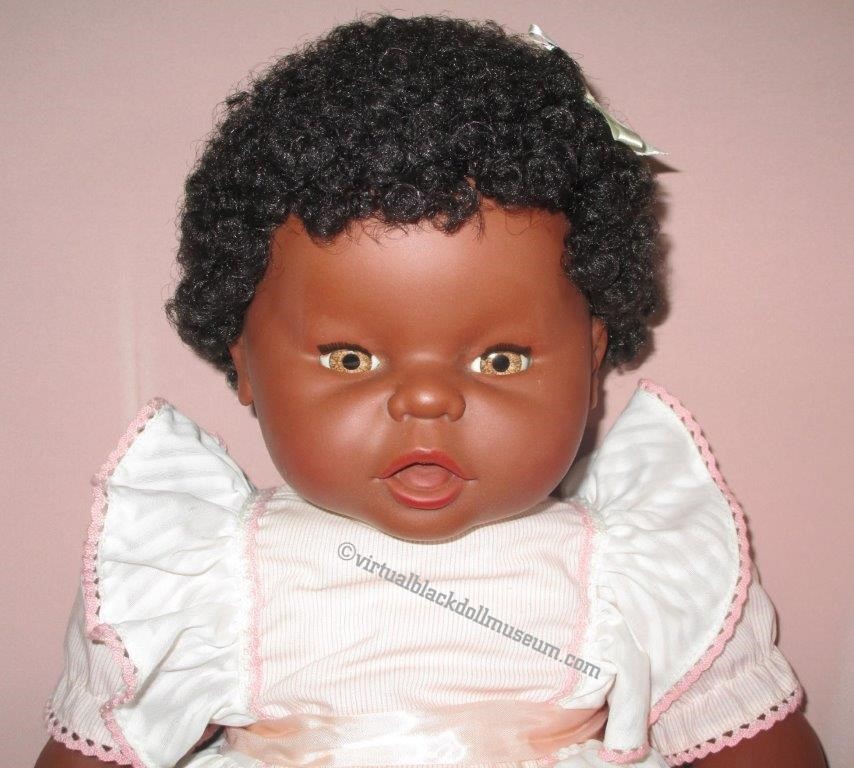
Hair, Eyes, Mouth: Tightly curled, natural-textured, short, rooted black hair adorned with a white ribbon bow on the top left; light-brown sleep eyes with attached black upper eyelashes, and an open mouth with a sculpted tongue and red lip color
Clothes: Wears a pink and white dress with ruffled fabric on the sides of the bodice, a pink waist sash, and white pantalettes
Other: Vicma was a prominent Spanish doll manufacturer primarily active in the mid-to-late 20th century. Based in Onil, Spain—a town famous for its toy-making industry (often called the “Cradle of Dolls”)—the company became a household name for its high-quality, expressive vinyl and cloth dolls.
The Ellita line by Vicma is one of the more elusive and intriguing series from the Spanish manufacturer. It included a line of fashion dolls and baby dolls, including African American versions, which are quite rare compared to Caucasian versions, and the larger African American size is even rarer. The Ellita dolls were marketed as a more classic, high-quality baby doll line, often featuring more diverse representations for the time.
This Vicma Ellita baby was imported from Spain and sold by a North Texas retailer known as Uncle Barry, who was a true “character” in an era of local retail that has largely disappeared. He was known for selling “truckloads” of toys in various areas in the Dallas-Fort Worth (DFW) metroplex. Uncle Barry’s most famous location was off Stemmons Freeway (I-35E), but he had several outlets across the DFW area, including locations in Garland, Texas, and near Love Field Airport.
For many Black families in Dallas at the time, Uncle Barry’s was one of the few places where you could find a wall full of beautiful Black dolls that weren’t just “afterthoughts” of a white doll line. In the 1980s, finding dolls with high-quality rooted “natural” hair was rare. Most American companies were still using straight hair on Black dolls. Uncle Barry’s imported Ellita dolls are wonderful physical souvenirs of North Texas nostalgia. While Vicma is no longer in active production today, its dolls remain highly sought after by vintage collectors, particularly those from the 1970s and 1980s.
Who Was Uncle Barry?
While he was not a manufacturer, Uncle Barry was a legendary Dallas, Texas, retailer who operated Uncle Barry’s Toy & Doll Outlet (and several other locations under the “Uncle Barry’s” name). He became a regional icon primarily because of his television commercials and his massive inventory of imported and discontinued toys.
Uncle Barry was the primary reason Vicma dolls became so popular in North Texas. He specialized in buying large quantities of toys directly from manufacturers or liquidators. He imported massive shipments of Vicma dolls from Spain, which is why they are much easier to find in the Dallas-Fort Worth “wild” (thrift stores and estate sales) than in other parts of the U.S.
Uncle Barry’s real name was Barry M. Katz. He was famous for his high-energy TV spots, in which he would shout about “unbelievable prices” and “truckloads of toys.” He was often seen wearing a signature hat and glasses, acting as the friendly, slightly chaotic “uncle” to every child in the DFW metroplex. After the stores closed in the early ‘90s, the “Uncle Barry’s” brand remained a staple of Dallas trivia. Today, if you find a vintage Vicma doll at a Texas antique mall, there is a very high probability it originally passed through one of Uncle Barry’s warehouses.
Gallery
_________
Your comments are valued. Donations support the initiative to preserve Black-doll history.
If you subscribe to DeeBeeGee’s Virtual Black Doll Museum™ by email, click the post title of the email, which links to the website to view all text and associated media. Please “like” and share this installation with your social media contacts. If you’d like to subscribe, add your email address to the subscribe or sign-up field in the footer or right sidebar. Add your email address to the subscribe or sign-up field in the footer or right sidebar.
 DeeBeeGee's Virtual Black Doll Museum™