Name: Squalling Baby
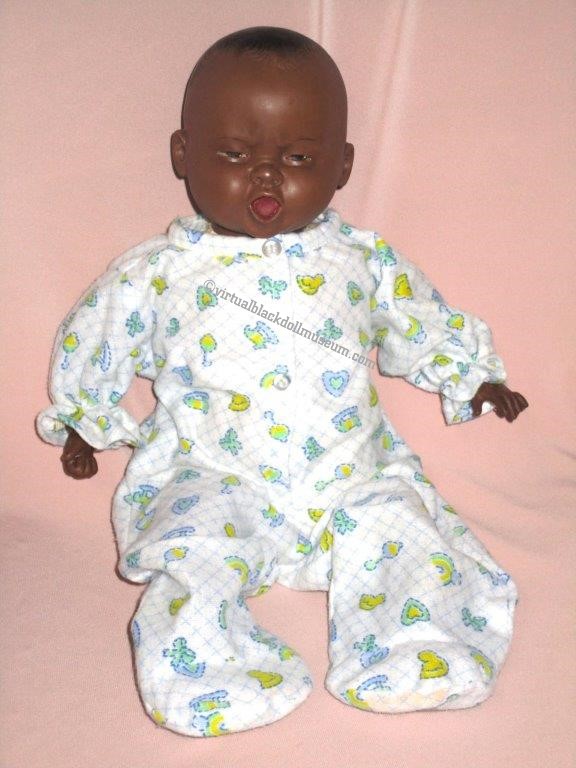
Made by and When: Unknown maker, circa early 1940s
Material: Stuffed vinyl head and limbs, stuffed cloth body, paint, and a working crier within the body
Marks: Unmarked
Height: 16 inches
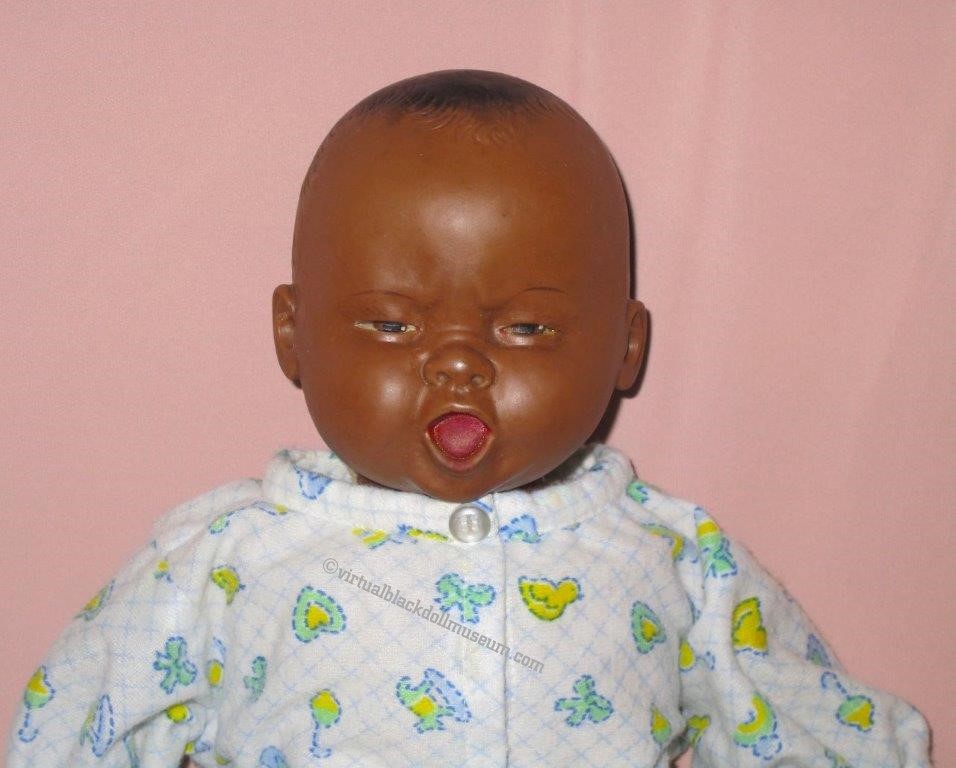
Hair, Eyes, Mouth: Black painted hair with faintly sculpted curls, squinted brown-painted eyes with painted upper eyelashes, squalling mouth with a painted-red tongue
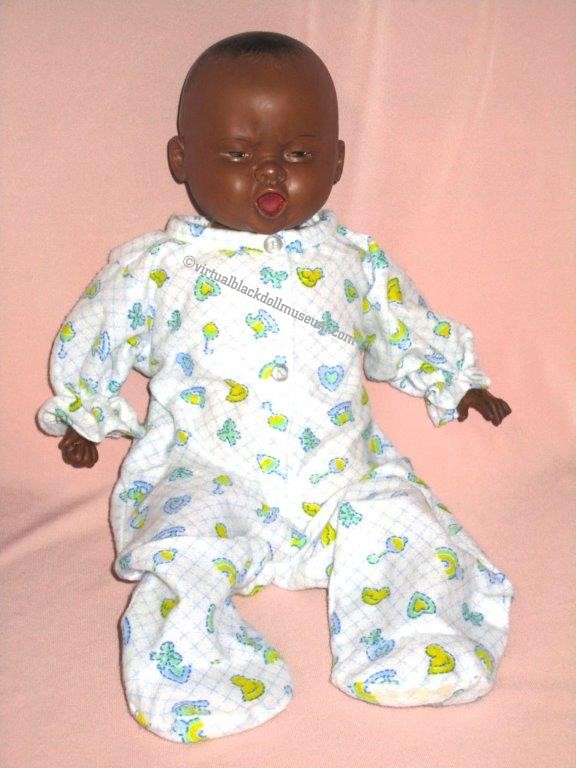
Clothes: The featured doll is redressed in a fleece romper. The other identical doll wears its original pink flannel gown.
Other: This squalling baby has a working crier that makes a “ma-ma” sound when the doll is tilted backward or laid down. Several companies made similar baby dolls with squalling expressions during the 1940s-1950s. Black versions of the featured doll in this installation are quite rare and have been incorrectly attributed to Fleischaker Novelty Company of Venice, California—the maker of the circa 1949 Lastic Plastic 20-inch doll named Bye-Bye Baby (sometimes referred to as Bi-Bye Baby); see the last gallery photo.
Fleischaker’s squalling baby doll uses a different head sculpt than the featured doll. Its stuffed head and limbs are made of a special vinyl (Lastic Plastic) that often darkens when exposed to extreme temperature changes and/or light. It is unknown if Fleischaker made black versions of their squalling baby. A photo of a 20-inch Fleischaker doll, marked COPR LASTIC PLASTIC 49 on the rim of the flange neck, is included in this installation for information purposes only. It cannot be verified that the Fleischaker doll was manufactured as a black doll, but it is possible that it was originally a blue-eyed white doll that almost uniformly darkened to brown.
The two identical, unmarked squalling babies featured in this installation, however, can be authenticated as black dolls. The redressed doll is owned by the museum’s curator. The doll dressed in its original pink gown was the childhood doll of a woman born in 1932. The originally dressed doll is now owned by the first owner’s niece, Sue Lane, whose sister (Ginger Hanson) shared the photo with the museum.
Gallery (Photos of the doll in the pink gown are courtesy of Ginger Hanson and Sue Lane.)
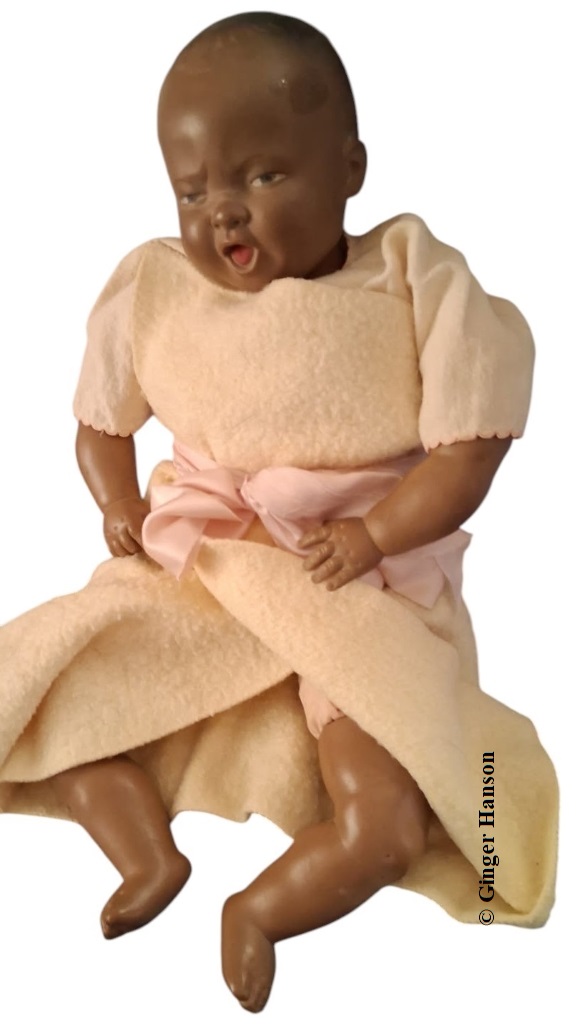
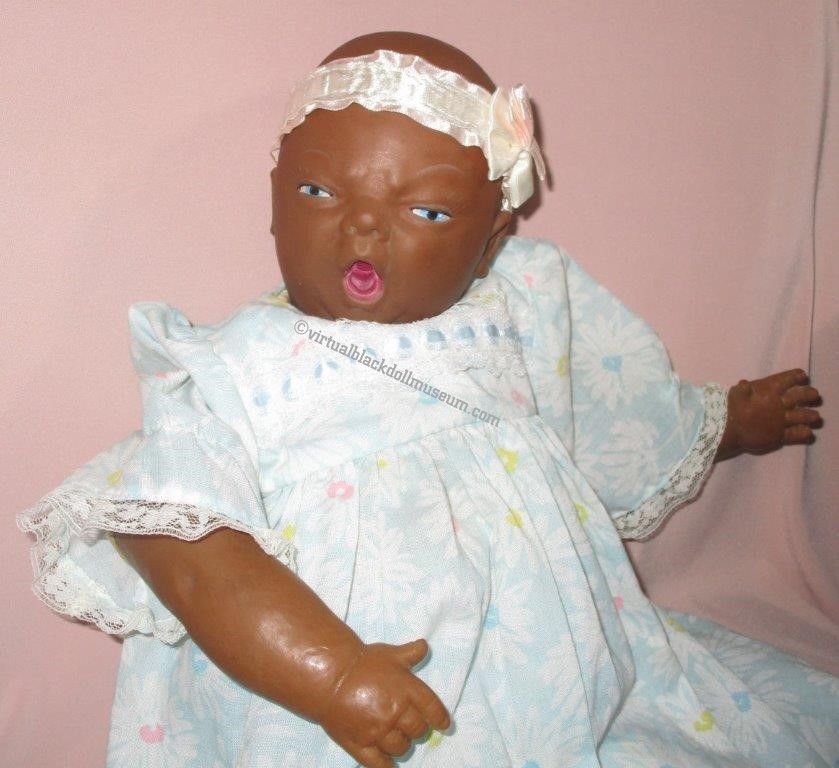
Not to be confused with the featured doll, the blue-eyed doll in the last gallery photograph has a different head sculpt, was made of Lastic Plastic by Fleischaker Novelty Company, is marked COPR LASTIC PLASTIC 49, and was possibly a white doll that turned brown.
_________
Your comments are valued. Donations support the initiative to preserve black-doll history.
If you subscribe to DeeBeeGee’s Virtual Black Doll Museum™ by email, click the post title of the email, which links to the website to view all text and associated media. Please “like” and share this installation with your social media contacts. If you’d like to subscribe, add your email address to the subscribe or sign-up field in the footer or right sidebar. Add your email address to the subscribe or sign-up field in the footer or right sidebar.
 DeeBeeGee's Virtual Black Doll Museum™