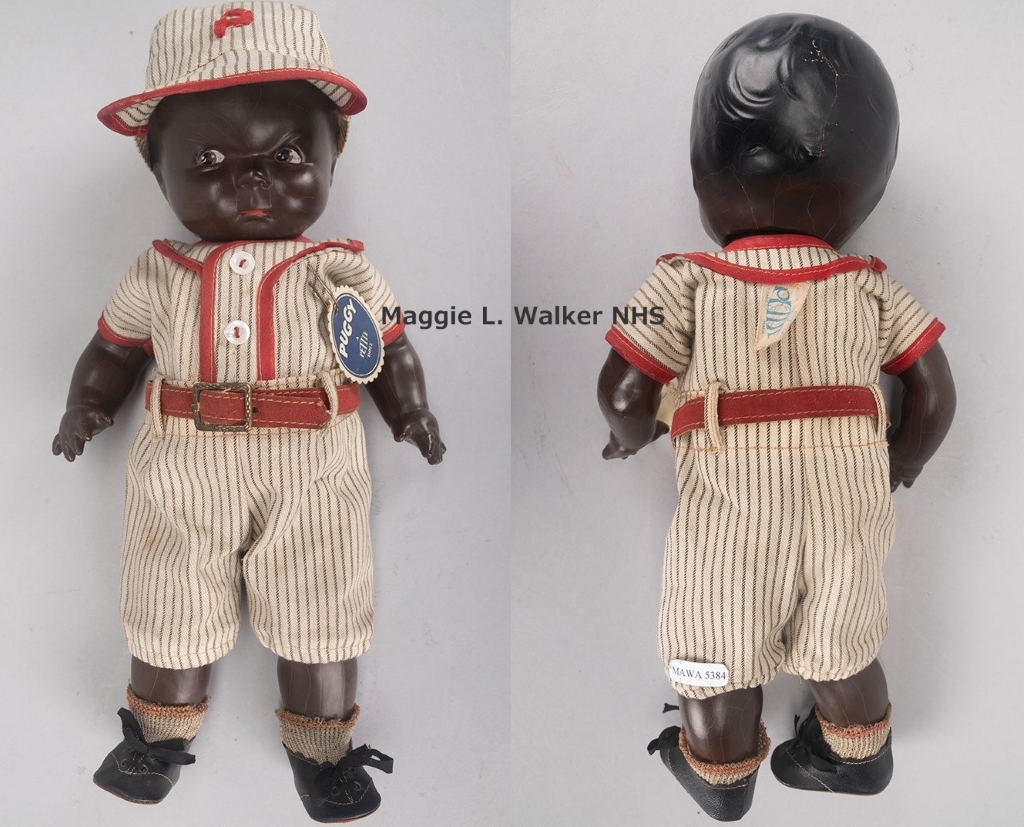
Name: Puggy
Made by and When: American Character, 1928-1929
Material: Composition
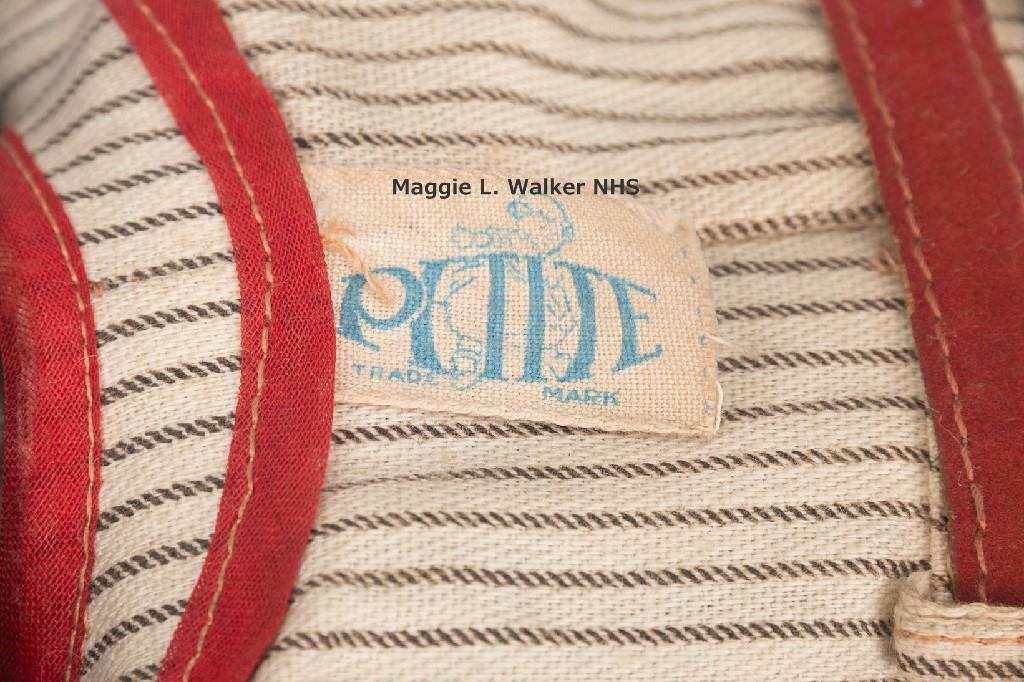
Marks: “A PETITE DOLL” on separate lines in raised letters is molded in the center of the doll’s back. A circular blue cardboard tag is pinned to the shirt and reads “PUGGY A PETITE DOLL” on the front. A tag sewn to the back of the shirt reads “PETITE TRADE MARK” on two separate lines.
Height: 13 inches
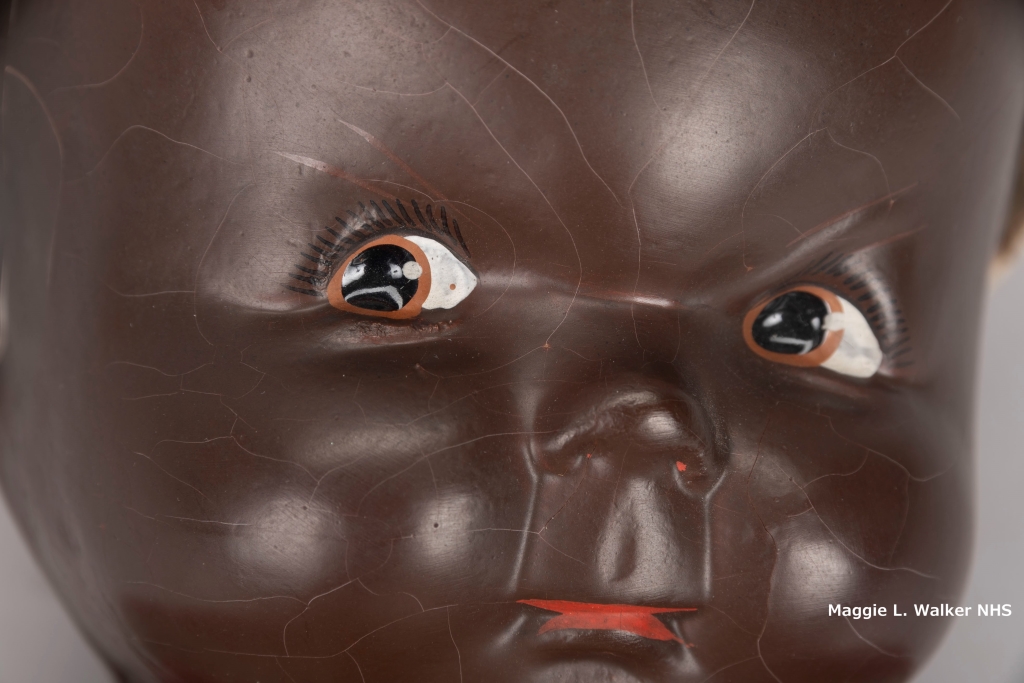
Hair, Eyes, Mouth: Sculpted and painted black hair with a center forehead curl, black painted side-glancing eyes trimmed in light brown paint with painted upper eyelashes, closed mouth with red lip paint; Puggy’s sculpted facial features express unhappiness about something.
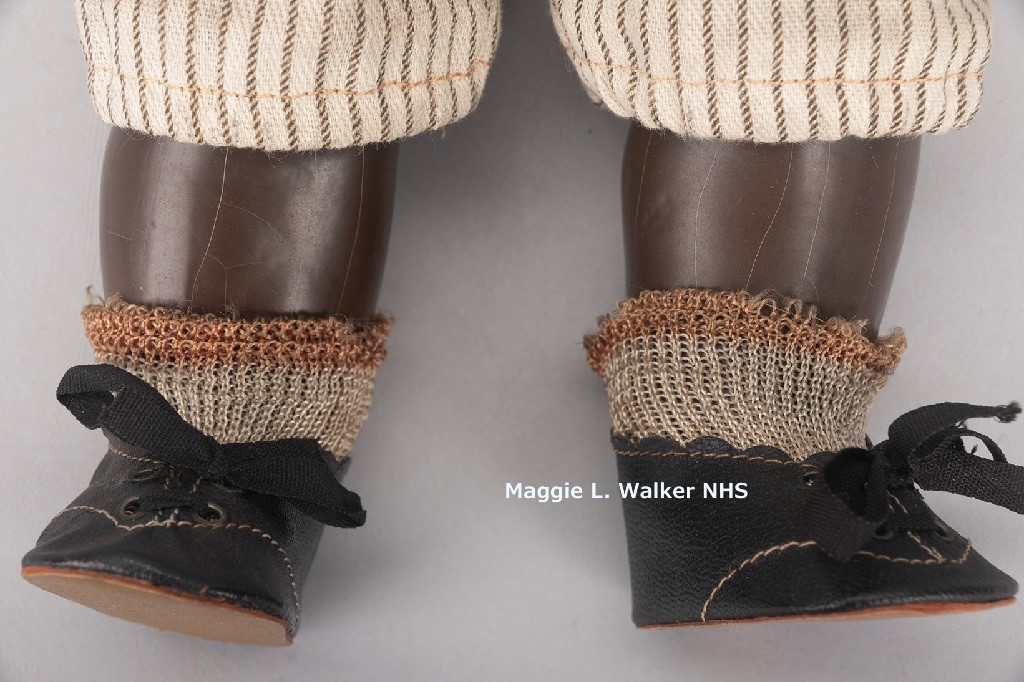
Clothes: Wears a brown and white striped baseball uniform trimmed in red, a matching cap with a red felt letter “P” hand-stitched to the cap, a red belt, brown or faded red-trimmed white knitted silk socks, and black lace-up shoes
Other: “In 1923 American Character trademarked the name Petite used on their early mama and character dolls. [Among others, they are] best known for the 1928 composition dolls; Campbell Kids, Puggy, and Sally dolls” (American Character Dolls). Puggy was made from 1928-1929. The doll in this installation is part of the Maggie L. Walker National Historic Site’s Museum Collection. It is presumed that Puggy might have belonged to one or all of Mrs. Walker’s grandchildren, who were born between 1918 and 1924.
Maggie Lena Walker (1864-1934), civil rights activist, trailblazing entrepreneur, and beloved African American community leader, “devoted her life to defeating racism, sexism, and economic oppression. Mrs. Walker chartered a bank, a newspaper, and a store 17 years before American women had the right to vote, and fostered black entrepreneurialism when Jim Crow laws threatened African American progress” (Maggie L. Walker National Historic Site). Devoted to teaching children literacy through her bank and instilling racial pride by seeking out black dolls (like Puggy), Mrs. Walker ensured that Black community children owned dolls that represented their heritage. Read more here.
Gallery (Photos and details are courtesy of the Maggie L. Walker National Historic Site.)

References:
“American Character Dolls.” American Character Dolls 1919-1968 USA. https://www.dollreference.com/american_character_dolls.html. Accessed 24 May 2025.
Maggie L. Walker National Historic Site. “Overview.” https://www.nps.gov/museum/exhibits/maggie_walker/index.html. Accessed 23 May 2025.
Magge L. Walker National Historic Site on Facebook
_________
Your comments are valued. Donations support the initiative to preserve black-doll history.
If you subscribe to DeeBeeGee’s Virtual Black Doll Museum™ by email, click the post title of the email, which links to the website to view all text and associated media. Please “like” and share this installation with your social media contacts. If you’d like to subscribe, add your email address to the subscribe or sign-up field in the footer or right sidebar. Add your email address to the subscribe or sign-up field in the footer or right sidebar.
 DeeBeeGee's Virtual Black Doll Museum™