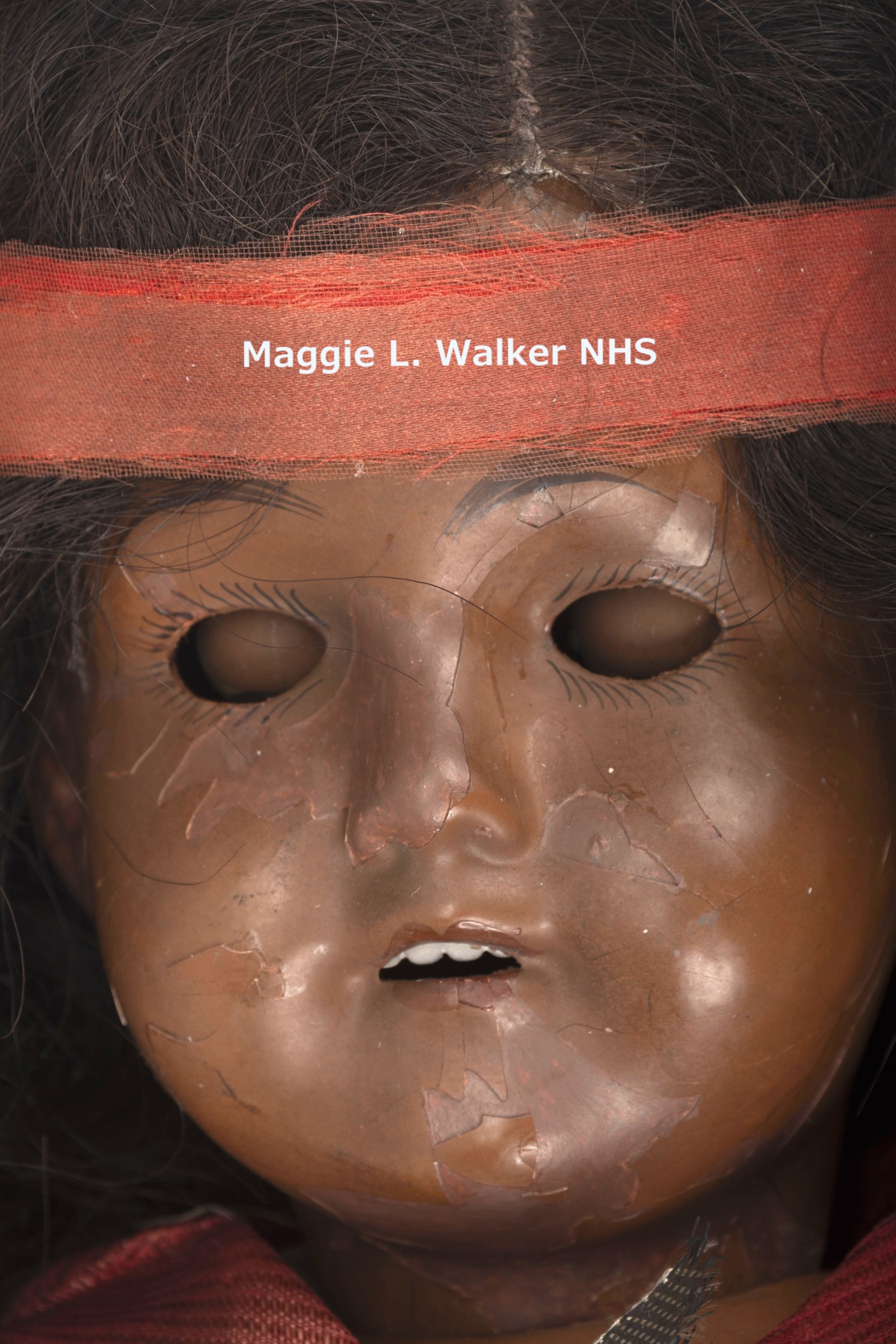
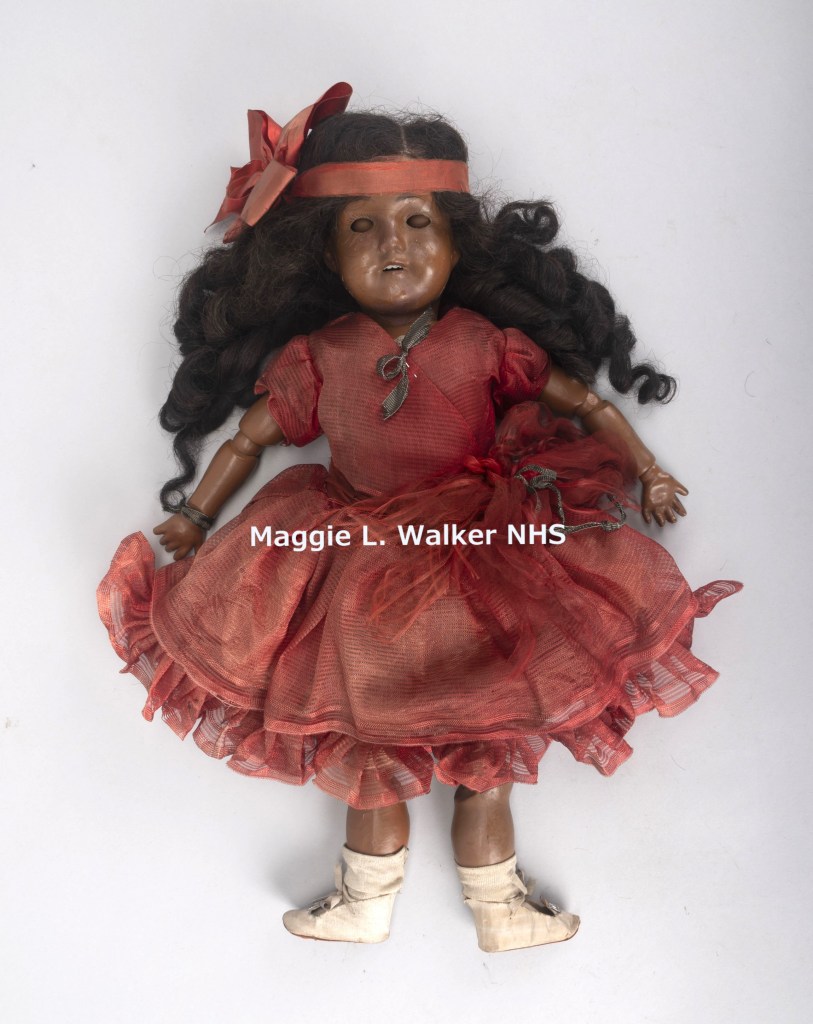
Name: 1920s Berry & Ross Girl
Made by and When: Berry & Ross, Inc.; circa 1920s
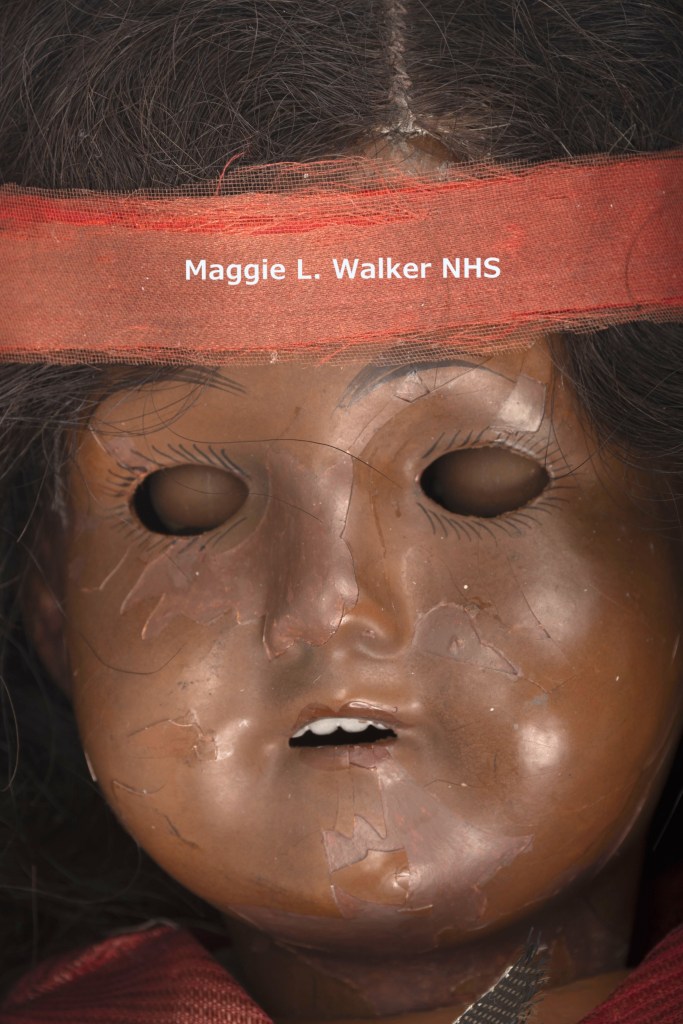
Material: Composition head and body (the texture of the body differs from the head) with extra articulation at the elbows, wrists, and knees.
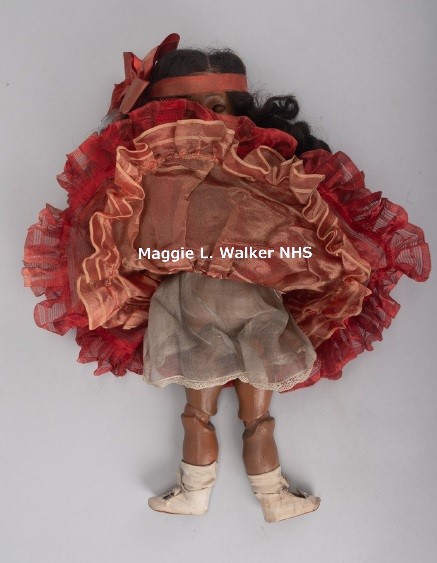
Marks: A label on the doll’s back reads, “Berry & Ross Inc / 36 West 135th St / New York”.
Height: 20 inches
Hair, Eyes, Mouth: Long black wig, brown sleep eyes with attached upper eyelashes and painted upper and lower eyelashes, open mouth with four upper teeth
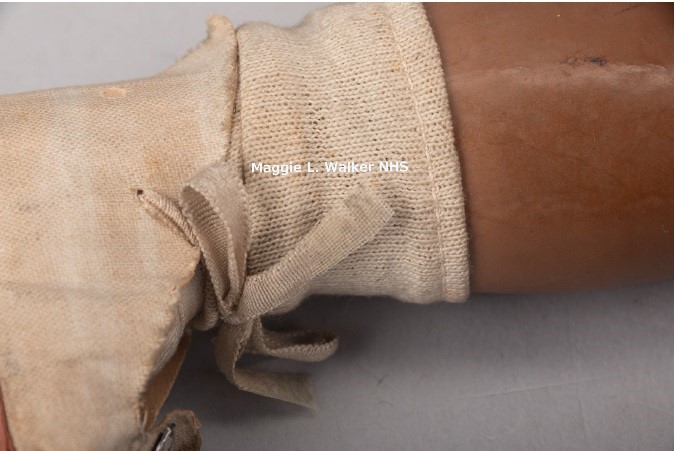
Clothes: Wears a red rayon dress, a pink rayon petticoat, a cotton slip with lace trim, cotton socks, cloth shoes, and a red ribbon is tied around the head in the Roaring Twenties style.
Other: The Berry & Ross doll company was a Black-owned doll company founded in 1918 by two Harlem, NY residents, Evelyn Berry and Victoria Ross. Located at 36-38 West 135th Street, the company remained in business until around 1929 and had close ties with Marcus Garvey’s UNIA Doll Factory. (Garvey’s Doll Factory used the same address as Berry & Ross). “These two women were the first African American female large-scale manufacturers of black composition dolls. The dolls appealed to both black and white children and were sold in large department stores in New York City, Boston, Philadelphia, and a few other cities” (Berry & Ross Doll Company in Harlem).
The lovely example of an authentic Berry & Ross doll in this installation is part of the Maggie L. Walker National Historic Site’s Museum Collection. It is presumed the doll was owned by one or all of Mrs. Walker’s grandchildren, who were born between 1918 and 1924. This doll was included in a temporary exhibit at the national historic site in honor of Maggie L. Walker’s 160th birthday.
Maggie Lena Walker (1864-1934), civil rights activist, trailblazing entrepreneur, and beloved African American community leader, “devoted her life to defeating racism, sexism, and economic oppression. Mrs. Walker chartered a bank, a newspaper, and a store 17 years before American women had the right to vote, and fostered black entrepreneurialism when Jim Crow laws threatened African American progress” (Maggie L. Walker National Historic Site). Devoted to teaching children literacy through her bank and instilling racial pride by seeking out black dolls (like the Berry & Ross doll in this installation), Mrs. Walker ensured that Black community children owned black dolls. Read more here.
Gallery (Photos and details are courtesy of the Maggie L. Walker National Historic Site.)

References:
“Berry & Ross Doll Company In Harlem, NY 1918 – 1929.” Harlem World Magazine. December 14, 2017. https://www.harlemworldmagazine.com/berry-ross-doll-company-in-harlem-ny-1918-1929/. Accessed 23 May 2025.
Maggie L. Walker National Historic Site. “Overview.” https://www.nps.gov/museum/exhibits/maggie_walker/index.html. Accessed 23 May 2025.
_________
Your comments are valued. Donations support the initiative to preserve black-doll history.
If you subscribe to DeeBeeGee’s Virtual Black Doll Museum™ by email, click the post title of the email, which links to the website to view all text and associated media. Please “like” and share this installation with your social media contacts. If you’d like to subscribe, add your email address to the subscribe or sign-up field in the footer or right sidebar. Add your email address to the subscribe or sign-up field in the footer or right sidebar.
 DeeBeeGee's Virtual Black Doll Museum™