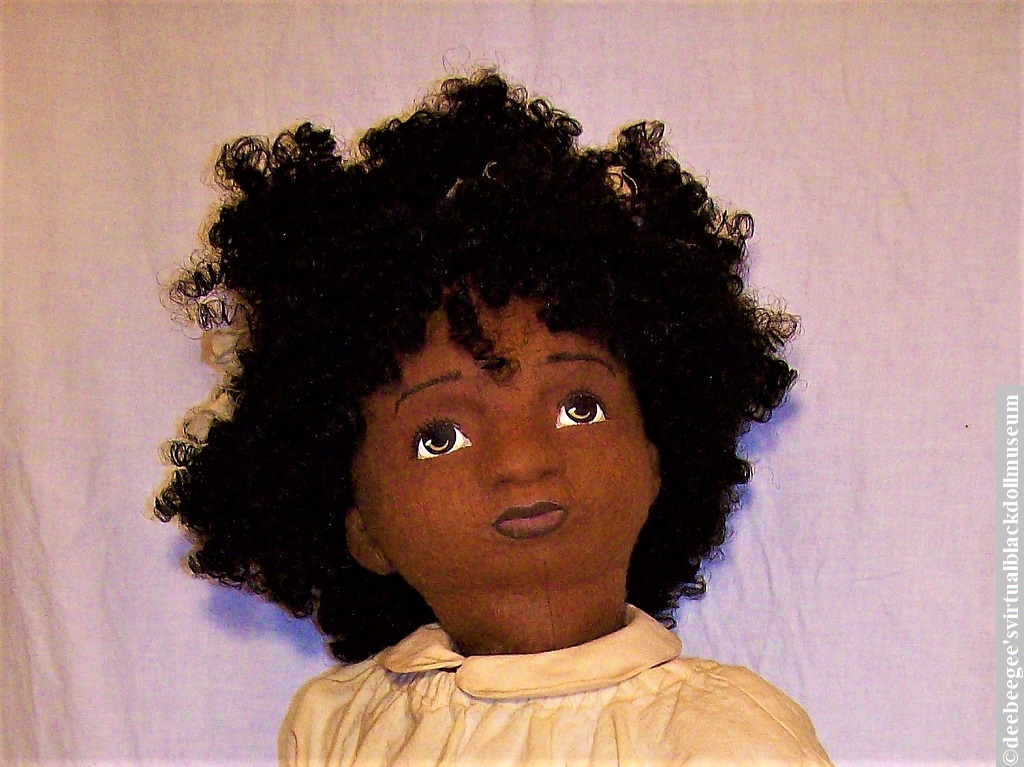
Name: Keziah – 1860
Made by and When: Carolyn Seybert, 1987
Material: Felt over a molded face with stuffed teddy-bear jointed arms and legs
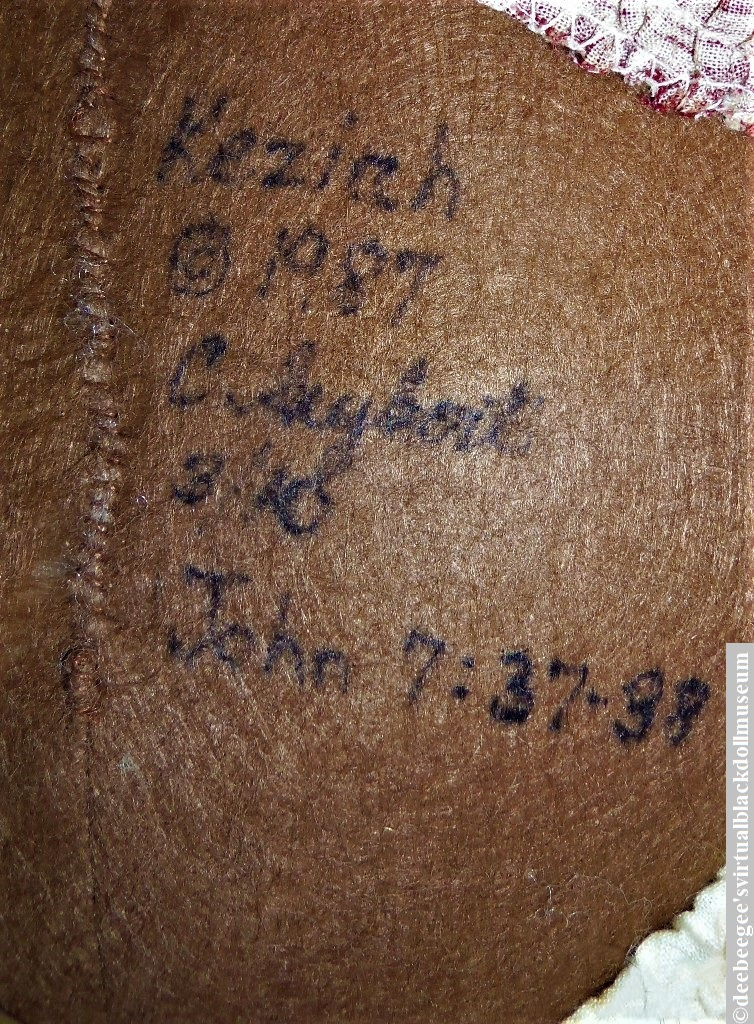
Marks: Keziah / ©1987 / C Seybert / 3 of 10 / John 7:37-38 (handwritten on the back)
Hang Tag reads: Keziah – 1860
natural-waist dress of plaid, homespun muslin collar, muslin apron with drawstring neck, called “old-fashion” style
Height: 23 inches
Hair, Eyes, Mouth: Black curly wig, hand-painted brown eyes, closed mouth, hand-painted lips
Clothes: Cranberry and off-white plaid dress with off-white muslin apron, off-white pantaloons with drawstring waist; hair has multiple off-white ribbons made of the apron fabric; the feet are bare.
Other: Keziah is the third doll in a limited edition of 10. The artist also made a male counterpart named Rufus 1860; see the last three gallery photos. The name Keziah means “One of Job’s daughters”; 1860 represents a year in the “life” of the doll, which would be five years before the 13th Amendment to the U.S. Constitution that abolished human enslavement.
The New International Version of the scripture written on the doll’s back, John 7:37-38 reads:
37 On the last and greatest day of the festival, Jesus stood and said in a loud voice, “Let anyone who is thirsty come to me and drink. 38 Whoever believes in me, as Scripture has said, rivers of living water will flow from within them.”
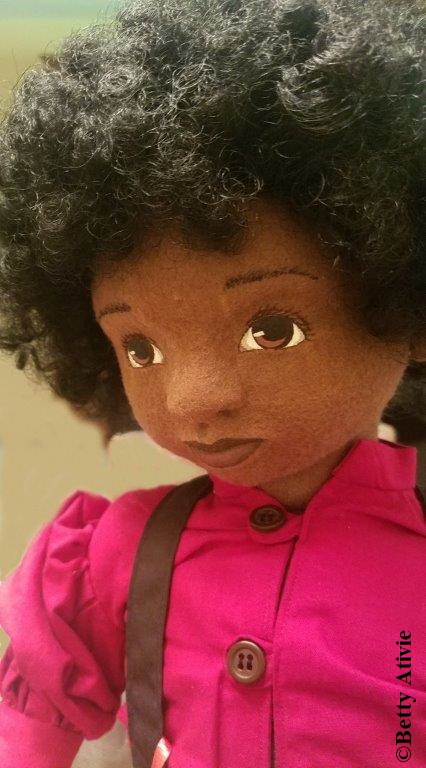
Gallery (Photos of Rufus – 1860 are courtesy of Betty Ativie.)



(The other doll shown here is a handmade cloth doll by a different artist.)

_________
Your comments are valued. Donations aid the initiative to preserve Black-doll history.
If you subscribe to DeeBeeGee’s Virtual Black Doll Museum™ by email, click the post title in the email, which links to the website to view all text and associated media. Please “like” and share this installation with your social media contacts. Add your email address to the subscribe or sign-up field in the footer or right sidebar.
 DeeBeeGee's Virtual Black Doll Museum™